Dismiss
Innovations
Everpure Simplifies Enterprise AI with Evergreen//One for AI and Data Stream Beta
Accelerate the transition from pilot to production with benchmark-proven performance, automated data pipelines, and a flexible consumption model.
Dismiss
June 16-18, Las Vegas
Pure Accelerate 2026
Discover how to unlock the true value of your data.
Dismiss
Innovation
A platform built for AI
Unified, automated, and ready to turn data into intelligence.
What Is a Modular Data Centre?
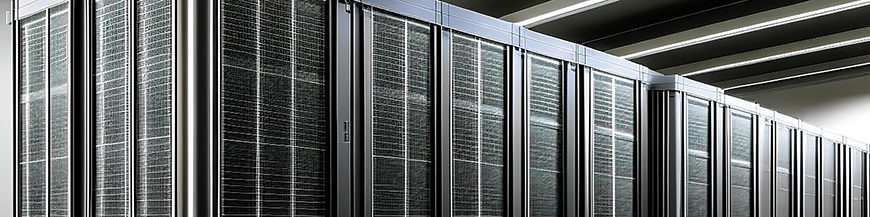
A modular data centre consists of data centre hardware delivered either as prefabricated self-contained units or in parts that can be easily assembled on-site.
How Do Modular Data Centers Work?
A modular data centre combines all the elements of a traditional data centre—including storage, processing, device racks, power supply, and cooling—into a self-contained, enclosed unit that is delivered ready to use and can be installed anywhere with available space and power.
Why Are Modular Data Centers Useful?
Modular data centers are an alternative to traditional data centers, which are constructed on-site and intended to be more or less permanent. Modular data centers are built from components manufactured off-site and delivered via prefabricated and pretested parts. Modular data centers have advanced to the point where they are just as capable, customizable, and scalable as large purpose-built data centers, but with advantages in flexibility and CAPEX requirements.
Modular data centers are shedding their reputation as being only for remote locations, specialized use cases, or temporary installation. The performance of modular data centers rivals that of larger, more powerful data centers—for example, modular data centers tend to offer lower latency that’s made possible by their proximity to workplaces. Factors such as increasing costs in real estate, construction, and compliance are causing organisations to reflect on the cost-effectiveness of building or acquiring space in larger data centers.
Types of Modular Data Centers
ISO shipping container: The intermodal shipping container, also known as an ISO container, is a common form factor for modular data centers due to the fact that the containers can be easily built and torn down as needed. The ISO container-housed data centers are typically installed outdoors with adjacent power supply and cooling systems.
Prefabricated data halls: These are “rooms” containing servers and network equipment, and are attached to a traditional data centre. The data halls may be leased to different customers than those of the traditional data centre. Data halls can be built and added to a traditional data centre over time as an organisation grows.
Skid-mounted system: The term “skid-mounted” refers to mounting hardware and other machinery on platforms that can be moved to new locations as needed.
Custom enclosure: These are usually weatherproof structures and can be installed in tighter spaces and are available in a range of sizes.
Benefits of Modular Data Centers
Rapid deployment. Because they’re completely manufactured off-site, modular data centers can be deployed quickly.
Cost. The cost comparisons between modular and traditional data centers depend on individual circumstances, but when compared with new construction, modular options are likely to cost less over time, even as scaling proceeds over time. The cost of a modular data centre is usually more predictable because there are little or no cost overruns from construction complications. Perhaps most important, there is no need to overbuild capacity to accommodate future growth.
Customization. Though modular data centers are completely premanufactured, specific components and capabilities can be built in, so there are no compromises for custom needs.
Compliance. For many organisations, cloud deployments may not be a viable option because of the need to isolate data. In these cases, the choice may be between a modular data centre or building out a data centre within existing space. A modular data centre may be a better choice based on cost and flexibility.
Latency. For some organisations, proximity to data and computing may be a deciding factor because of the need for low latency. A modular, on-prem data centre can offer advantages in performance versus the cloud.
Flexibility. Modular data centers provide a way to manage growth of data centre needs without the hassles of construction, the costs of real estate, and needing to right-size data centre deployments. Modular data centers can be added over time, as needed, with predictable costs and timing.
Conclusion
In summary, as the imperative for sustainable practices in data centre operations grows ever more pressing and the data deluge shows no signs of slowing, modular data centers stand out as a strategic asset for companies looking to stay competitive in a digitally-driven marketplace. Organisations must pivot towards solutions that not only meet the computational demands of a data-driven future but also align with environmental goals.
Everpure's FlashArray emerges as an exemplary model for the shift to a greener data centre. It enables enterprises to meet their extensive workload requirements while simultaneously shrinking their environmental footprint, thanks to its advanced data reduction and compression capabilities. By integrating FlashArray into their infrastructure, companies can significantly reduce power consumption and cooling costs—cornerstones of a truly green data centre. This commitment to efficiency and sustainability is not just good corporate citizenship; it's a strategic business advantage in an eco-conscious market.
Browse key resources and events

TRADESHOW
Pure Accelerate 2026
June 16-18, 2026 | Resorts World Las Vegas
Get ready for the most valuable event you’ll attend this year.

PURE360 DEMOS
Explore, learn, and experience Everpure.
Access on-demand videos and demos to see what Everpure can do.

VIDEO
Watch: The value of an Enterprise Data Cloud
Charlie Giancarlo on why managing data—not storage—is the future. Discover how a unified approach transforms enterprise IT operations.

BLOG
What’s in a Net Promoter Score?
For nine consecutive years, Everpure has maintained a Net Promoter Score of over 80. Find out how we did it and what it means for our customers.
Personalize for Me