Dismiss
Innovations
Everpure Simplifies Enterprise AI with Evergreen//One for AI and Data Stream Beta
Accelerate the transition from pilot to production with benchmark-proven performance, automated data pipelines, and a flexible consumption model.
Dismiss
June 16-18, Las Vegas
Pure Accelerate 2026
Discover how to unlock the true value of your data.
Dismiss
Innovation
A platform built for AI
Unified, automated, and ready to turn data into intelligence.
What Is 2D NAND and How Does It Work?
What Is a 2D NAND SSD?
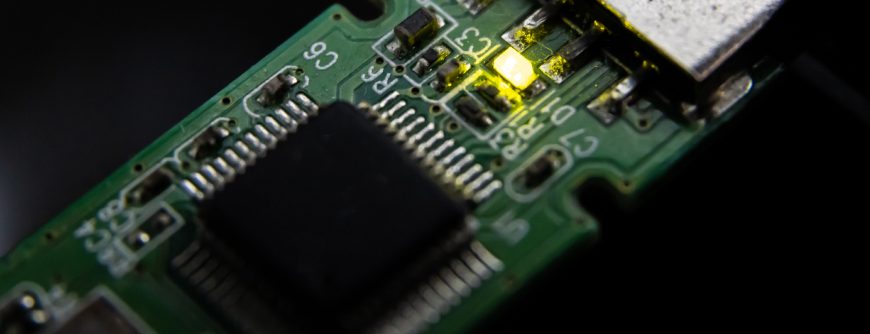
2D NAND, also known as planar NAND, is a type of flash memory in which flash memory cells are placed side by side on a transistor die. Initially released commercially in 1987, 2D NAND gave early solid-state drives (SSDs) better performance, read/write speeds, and mechanical robustness than their hard-disk drive (HDD) counterparts but at a premium cost per capacity. The capacity was fundamentally limited by the number of cells you could fit side by side in a single plane, prompting the development of 3D NAND. In this article, we’ll look at what 2D NAND is, how it works, and how reliable it is.
How Does 2D NAND work?
2D NAND works by storing memory bits as voltage states within an electrical circuit. To understand how 2D NAND works, it’s important to first cover a few concepts around NAND cells.
What does the NAND in 2D NAND mean?
NAND stands for “NOT AND,” and it describes the logic gate or Boolean operator used in the internal circuit of a NAND cell. A NAND gate produces a FALSE value only if both inputs are TRUE.
What exactly is a NAND cell?
A NAND cell is a transistor consisting of a control gate on top and a floating gate sandwiched between two isolation layers with a channel linking source and drain below.
Applying a voltage across the control gate attracts electrons in the channel to tunnel through the first isolation layer and into the floating gate. When the floating gate is in this charged state, data is effectively stored, and the cell’s binary value is set to zero. And because the floating gate is electrically isolated, it will store memory even when the power is removed, making the memory cell non-volatile.
Applying a high enough voltage across the source and drain induces a negative voltage at the control gate. This discharges the floating gate electrons back into the channel, effectively erasing the memory cell. The binary value of the cell is set to 1.
How many bits can you store in 2D NAND?
It’s a common misconception that 2D NAND can’t store more than one bit per cell. The planar nature of 2D NAND doesn’t mean you can’t use MLC, TLC, and QLC cells. It just means you can’t stack those cells.
Here’s an overview of the evolution of NAND cells overtime:
- Single-level cell (SLC) flash: One bit per cell, two possible voltage states
- Multi-level cell (MLC) flash: Two bits per cell, four possible voltage states
- Triple-level cell (TLC) flash: Three bits per cell, eight possible voltage states
- Quad-level cell (QLC) flash: Four bits per cell, 16 possible voltage states
As you can see, the more voltage states you can store per cell, the more bits of information you can store. There’s a general tradeoff in reliability and capacity as you try to store more voltage states.
How Reliable is 2D NAND vs. 3D NAND?
The difference between 2D NAND and 3D NAND is that 2D NAND is planar, while 3D NAND incorporates vertical stacking. The primary limiting factor for 2D NAND has been the number of cells you can fit within a single plane on a chip. The smaller the cell, the more you can fit on a single transistor plane. On the flip side, smaller cell sizes reduce reliability by increasing the likelihood of electron leakage.
Engineers created 3D NAND to improve the capacity of the NAND chips by vertically stacking cells. Since you lose reliability as you shrink cells, the vertical stacking also gives you the wiggle room to use larger cells for improved reliability. The end result is a net increase in both capacity and reliability of a NAND chip.
Which SSDs use 2D NAND flash?
Most SSDs on the market currently use NAND flash. Because 2D NAND is an older technology that is currently being phased out, vendors no longer advertise its use in their products. Older SATA SSDs using SLC chips that aren’t advertised as 3D NAND are likely using cheaper 2D NAND flash. That said, the technology still has its niche uses. Legacy deployments may still require older 2D NAND flash, and microdevices that don’t require much memory might instead opt for the performance and reliability of SLC cells on a single transistor plane.
Conclusion
In this article, we covered what 2D NAND is and how it differs from 3D NAND. While 2D NAND is an older technology, it’s still utilized in legacy hardware as a cheaper version of flash memory and in niche use cases.
We Also Recommend...
Browse key resources and events

TRADESHOW
Pure Accelerate 2026
June 16-18, 2026 | Resorts World Las Vegas
Get ready for the most valuable event you’ll attend this year.

PURE360 DEMOS
Explore, learn, and experience Everpure.
Access on-demand videos and demos to see what Everpure can do.

VIDEO
Watch: The value of an Enterprise Data Cloud
Charlie Giancarlo on why managing data—not storage—is the future. Discover how a unified approach transforms enterprise IT operations.

BLOG
What’s in a Net Promoter Score?
For nine consecutive years, Everpure has maintained a Net Promoter Score of over 80. Find out how we did it and what it means for our customers.
Personalize for Me