Dismiss
Innovations
Everpure Simplifies Enterprise AI with Evergreen//One for AI and Data Stream Beta
Accelerate the transition from pilot to production with benchmark-proven performance, automated data pipelines, and a flexible consumption model.
Dismiss
June 16-18, Las Vegas
Pure Accelerate 2026
Discover how to unlock the true value of your data.
Dismiss
Innovation
A platform built for AI
Unified, automated, and ready to turn data into intelligence.
What Is Microwave-assisted Magnetic Recording (MAMR)?
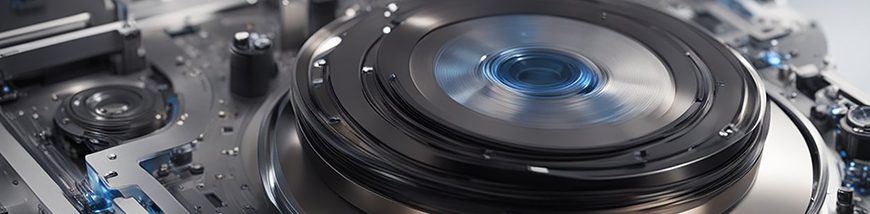
Microwave-assisted magnetic recording (MAMR) is a revolutionary technology in the field of data storage that enhances the performance of hard disk drives (HDDs). Traditional HDDs store and retrieve data by using a magnetic write head to alter the magnetic orientation of tiny regions on a disk. MAMR improves this process by using microwaves to increase the amount of data that can be stored within a given amount of physical space on a hard drive's platters.
What Is Microwave-assisted Magnetic Recording?
MAMR is a breakthrough in magnetic recording technology that overcomes the limitations of traditional methods. Unlike conventional magnetic recording, which relies solely on magnetic fields generated by a writer head to flip the magnetic orientation of tiny regions on a disk, MAMR uses microwaves to reduce the coercivity of the material, making it easier to write data and achieve higher storage densities.
While MAMR offers promising advantages, challenges have emerged in its implementation. As data storage demands continue to grow, achieving higher storage densities with MAMR becomes more challenging due to factors like thermal stability and signal-to-noise ratio. Additionally, the rise of flash drives has presented a formidable alternative to HDDs and poses a competitive threat to MAMR.
The increasing prevalence of flash-based storage solutions has led to a shift in the industry, as solid-state drives (SSDs) offer faster read and write speeds, greater durability, and smaller form factors compared to traditional HDDs. As a result, the adoption of MAMR is facing resistance in certain applications where flash storage has become the preferred choice.
How Does MAMR Work?
At the heart of MAMR technology are two primary components: the microwave field generator and the recording medium. The microwave field generator produces microwaves that are directed toward the recording medium, influencing its magnetic properties.
The microwave field plays a crucial role in the writing process. By applying microwaves to the recording medium, the coercivity of the material is temporarily reduced, making it more susceptible to the magnetic field from the writer head. This allows for more precise and efficient data recording.
The introduction of microwaves also enhances the stability of stored data. The lower coercivity during the writing process is balanced by the material's inherent thermal stability, ensuring that the recorded data remains intact over time. This is a critical factor in the reliability of storage systems, especially as data retention periods continue to extend.
Benefits of Microwave-assisted Magnetic Recording
The key advantages of MAMR are higher data density (as mentioned above) and improved energy efficiency. MAMR optimises the writing process, requiring less energy to flip the magnetic orientation of data bits. This not only contributes to lower power consumption but also enhances the overall sustainability of data storage systems.
MAMR also has the potential to increase the storage capacities and extend the lifespan of hard drives. With higher data density, hard drives that use MAMR can accommodate more information to meet the rapidly accelerating demand for increased storage in various applications. Additionally, the stability introduced by microwaves during the writing process enhances the durability of stored data, ensuring a longer lifespan for hard drives utilizing MAMR technology.
Disadvantages of MAMR
While MAMR offers compelling advantages, it also has drawbacks, particularly in comparison to flash storage solutions. Flash storage has gained prominence due to its superior performance in terms of speed and efficiency. The inherent limitations of mechanical components in MAMR-based systems result in slower read and write speeds compared to the nonmechanical nature of flash storage.
The battle between MAMR and flash storage isn’t solely about speed but also about storage density. Flash storage, with its compact and solid-state design, often outperforms MAMR in terms of density. Moreover, the cost of flash storage has been steadily dropping, making it an increasingly attractive alternative to traditional hard drives equipped with MAMR technology.
Applications of MAMR
MAMR holds significant promise across various industries, primarily because it addresses the surging demand for larger storage capacities and faster data access. In data centers, where massive amounts of information are stored and accessed regularly, MAMR-powered hard drives can provide a viable solution. Cloud storage providers can leverage MAMR to enhance their infrastructure, ensuring efficient and reliable data storage for their clients. Moreover, in consumer electronics, MAMR offers the potential for higher-capacity storage solutions in devices such as laptops and desktop computers.
Challenges and Future Developments
Despite its potential, MAMR faces challenges that need to be overcome for widespread adoption. Thermal effects, stemming from the introduction of microwaves, can impact the overall stability of the system. Manufacturing complexities also pose hurdles, influencing production costs and scalability.
Researchers are actively working to address these challenges and enhance the capabilities of MAMR technology. Ongoing developments in materials science and engineering aim to mitigate thermal effects, ensuring the reliability of MAMR-based systems. Future iterations of MAMR may incorporate advanced manufacturing techniques, potentially reducing costs and increasing scalability.
Conclusion
MAMR is an important evolution in data storage technology that has significantly enhanced the potential and use of HDDs. Still, MAMR technology has key disadvantages when compared to other data storage technologies such as flash drives, which are quickly becoming the future of data centers for their speed, efficiency, and cost-effectiveness.
Everpure FlashArray//E™ and FlashBlade//E™ represent a new era of data storage, offering the benefits of flash at a cost competitive with disk. Read “The All-Flash Data Centre Is Here” to learn more.
We Also Recommend...
Browse key resources and events

TRADESHOW
Pure Accelerate 2026
June 16-18, 2026 | Resorts World Las Vegas
Get ready for the most valuable event you’ll attend this year.

PURE360 DEMOS
Explore, learn, and experience Everpure.
Access on-demand videos and demos to see what Everpure can do.

VIDEO
Watch: The value of an Enterprise Data Cloud
Charlie Giancarlo on why managing data—not storage—is the future. Discover how a unified approach transforms enterprise IT operations.

BLOG
What’s in a Net Promoter Score?
For nine consecutive years, Everpure has maintained a Net Promoter Score of over 80. Find out how we did it and what it means for our customers.
Personalize for Me