Dismiss
Innovations
Everpure Simplifies Enterprise AI with Evergreen//One for AI and Data Stream Beta
Accelerate the transition from pilot to production with benchmark-proven performance, automated data pipelines, and a flexible consumption model.
Dismiss
June 16-18, Las Vegas
Pure Accelerate 2026
Discover how to unlock the true value of your data.
Dismiss
Innovation
A platform built for AI
Unified, automated, and ready to turn data into intelligence.
What Is a Cyber Incident Response?

Glancing at the latest tech-world headlines should be enough to warrant concern around cybersecurity, which has rapidly evolved from an IT department issue to a boardroom priority. With cyber threats evolving in both complexity and scale, no organisation is immune. From ransomware attacks disrupting global supply chains to data breaches compromising millions of sensitive records, the stakes are higher than ever.
The question is what you can do about it. Often, it’s not a matter of “if” but “when,” and this means preparedness is key.
Cyber incident response is a structured approach to detect, investigate, contain, and recover from cyberattacks. It’s not just a technical process but a strategic one, involving coordination across technical teams, business units, and external partners. A well-orchestrated incident response strategy can mean the difference between a manageable disruption and a catastrophic fallout.
Read on to explore the key aspects of cyber incident response, its benefits, challenges, and how to effectively implement it in your organisation.
What Is Cyber Incident Response?
Cyber incident response refers to the structured approach organisations take to address and manage the aftermath of a cybersecurity breach or attack. It involves a set of procedures and strategies designed to detect, respond to, and mitigate the impact of security incidents while minimizing damage and recovery time.
The Importance of Cyber Incident Response
The significance of having a well-prepared cyber incident response strategy cannot be overstated.
These are the primary benefits of cyber incident response:
Rapid Threat Mitigation
Cyber threats are evolving at an alarming rate, and attackers are becoming more sophisticated. By detecting, analysing, and containing threats quickly, organisations can prevent or at least dramatically reduce data loss, financial harm, and operational disruption.
Business Continuity
The cost of downtime is only getting higher, which means your company’s ability to maintain operations during and after a cyber incident is only getting more important. Downtime can result in financial losses, productivity decline, and loss of customer trust. A robust incident response plan ensures that businesses can continue functioning while mitigating the effects of an attack. This involves backup strategies, contingency planning, and coordinated response teams to restore normal operations as quickly as possible.
Regulatory Compliance
Ultimately, for the sake of data protection, regulatory bodies across industries have implemented strict requirements regarding cybersecurity and incident response. Regulations like GDPR, HIPAA, and CCPA mandate that organisations have incident response plans in place to protect sensitive data and ensure accountability. Failure to comply with these regulations can result in hefty fines and legal repercussions, making it imperative for businesses to align their response strategies with regulatory expectations. The good news is that you can turn regulatory compliance into an advantage by using it as a guide to best practices for cyber resilience.
Reputation Management
A company’s reputation is one of its most valuable assets. A poorly handled cyber incident can erode customer trust, damage brand credibility, and lead to loss of business. Transparent communication, swift action, and responsible management of security incidents can help preserve customer confidence. Organisations that demonstrate strong incident response capabilities show stakeholders that they take cybersecurity seriously and are committed to protecting their data.
Key Components of Cyber Incident Response
Cyber incidents are an inevitable reality today, but a well-structured cyber incident response plan can make that reality much easier to manage.
How you respond will be specific to your company, product, and the nature of the attack, but certain elements are common to all good cyber incident response plans.
An easy way to think of it is in terms of “before,” “during,” and “after” the event:
- Before an attack, you need to get visibility and control of the attack surface.
- During an attack, you need to isolate the event and invoke business continuity and disaster recovery plans.
- After an attack, you need to begin quick recovery and conduct advanced forensics and cleanup.
More specifically, these stages break down into the following:
1. Preparation
Surprisingly, many companies still aren’t fully prepared for cyber incidents. Good preparation is the foundation of an effective cyber incident response strategy. What does “good preparation” mean? It means proactively developing policies, tools, and teams to handle potential security breaches, including:
- Developing a comprehensive incident response plan that establishes clear protocols detailing how to detect, respond to, and recover from cyber incidents
- Establishing a dedicated incident response team of designated cybersecurity professionals responsible for managing incidents
- Conducting regular training and simulations, including frequent drills and tabletop exercises, to ensure that response teams are ready for real-world incidents
2. Identification
Early detection of cyber incidents is crucial for minimizing their impact. Organisations should implement mechanisms to recognize and classify potential threats.
Identification involves:
- Implementing robust detection systems that use things like security information and event management (SIEM) tools and intrusion detection systems to monitor network activity
- Monitoring for anomalies and potential threats by continuously assessing network traffic and system logs for signs of compromise
- Establishing clear incident classification criteria that define the severity levels of incidents to ensure an appropriate response
3. Containment
Once you identify an incident, you’ll need to conduct swift containment measures to prevent further damage.
This phase consists of:
- Isolating affected systems by siloing compromised networks or devices to prevent lateral movement of threats
- Implementing short- and long-term containment strategies that may involve disabling affected user accounts, applying patches, and reconfiguring security controls
- Preserving evidence for later analysis, including maintaining logs, forensic images, and other digital artifacts to facilitate investigations and legal proceedings
4. Eradication
After containment, organisations must eliminate the root cause of the incident and ensure that the environment is secure. The eradication phase includes:
- Removing the threat from the environment by deleting malware, disabling compromised accounts, and shutting down unauthorized access points
- Addressing the vulnerability that led to the incident, including conducting thorough assessments to fix exploited weaknesses
- Implementing additional security measures that strengthen defenses through patch management, endpoint protection, and enhanced access controls
5. Recovery
Backup and recovery solutions not only provide peace of mind but also help protect your bottom line. Restoring affected systems is vital to resume normal operations safely.
Recovery involves:
- Restoring affected systems and data via backups and validated system images to reinstate functionality
- Verifying system integrity and functionality, including testing systems post-recovery to confirm their security and performance
- Monitoring for any signs of recurring issues via heightened vigilance to detect potential re-infections or residual threats
Using solutions like on-demand disaster recovery as a service can significantly enhance your incident response strategy.
6. Lessons Learned
Every cyber incident, while unwelcome, can be a learning opportunity. Post-incident analysis helps organisations improve their security posture and prevent future incidents.
This phase includes:
- Conducting a post-incident review by gathering insights from the response team to evaluate what worked and what needs improvement
- Updating incident response plans based on findings and revising strategies and protocols to address newly identified gaps
- Sharing your insights with relevant stakeholders by communicating findings with IT teams, executives, and external partners to enhance overall security resilience
Challenges in Cyber Incident Response
Effectively responding to incidents requires a combination of skilled personnel, advanced tools, and seamless coordination. However, several challenges can get in the way of your company’s ability to respond swiftly and effectively.
Below are some of the most significant challenges in cyber incident response.
The Evolving Threat Landscape
Cybercriminals continuously develop new attack methods, making it difficult for organisations to stay ahead of the curve. Security teams must constantly update their threat intelligence, implement proactive defense measures, and adapt their response strategies to counter emerging threats.
Resource Constraints
Many organisations struggle with limited cybersecurity resources, both in terms of personnel and technology. A shortage of skilled cybersecurity professionals means that incident response teams are often overburdened. Additionally, budget limitations may prevent organisations from acquiring cutting-edge security tools, leaving them vulnerable to attacks. Investing in training, automation, and managed security services can help mitigate these constraints.
Complexity of Modern IT Environments
The widespread adoption of cloud services, IoT devices, and hybrid infrastructures has expanded the attack surface and made it much harder for security teams to see and understand all their vulnerabilities. With data and applications spread across multiple environments, detecting and containing threats becomes even more challenging. Organisations must ensure that their incident response plans account for the complexity of their IT ecosystems and include strategies for securing endpoints, cloud platforms, and networked devices.
Communication and Coordination
Effective incident response requires clear and timely communication across various teams, including IT, security, legal, and executive leadership. Poor coordination can lead to delays in containment, misinterpretation of threats, and increased damage. Organisations should establish well-defined incident response protocols, conduct regular tabletop exercises, and leverage collaboration tools to enhance communication during a cyber incident.
Why Everpure for Cyber Incident Response
Everpure offers a comprehensive approach to ensuring data protection and recovery through multiple layers of security and redundancy. This architecture is designed to provide robust protection against data loss, corruption, and cyber threats, ensuring business continuity and rapid recovery in the event of a disaster.
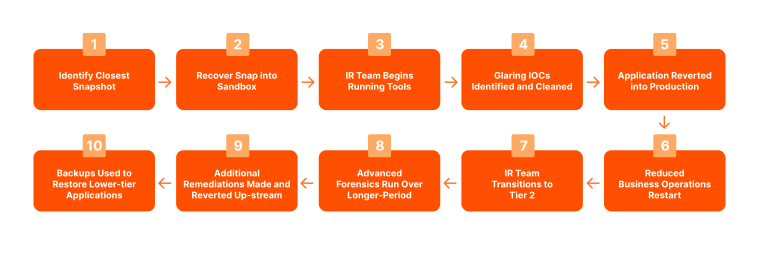
Figure 1: The Everpure Cyber Resilience Framework
Everpure addresses the critical aspects of incident response, offering:
- Speed and simplicity: Everpure all-flash solutions enable rapid data recovery.
- Native resilience: Features like SafeMode™ Snapshots provide an additional layer of protection against data loss and ransomware attacks.
- Scalability: Everpure solutions can grow with your organisation, ensuring your incident response capabilities remain robust as your data needs expand.
- Integrated security: Always-on encryption and secure multi-tenancy help maintain data integrity and confidentiality.
- Operational agility: Pure1® offers security assessments and resilience scoring, helping organisations continuously improve their security posture.
- Alliance ecosystem: Everpure partners with leading cybersecurity vendors to provide comprehensive, integrated solutions for incident response.
- The first-of-its-kind ransomware recovery SLA for Evergreen//One™: This SLA for our storage-as-a-service (STaaS) offering guarantees organisations a clean storage environment following an attack, including a full recovery plan, a data transfer rate, and bundled professional services to help during worst-case scenarios.
Learn more about how Everpure helps you with effective cyber incident response through a cyber resilience strategy.
We Also Recommend...
Browse key resources and events

TRADESHOW
Pure Accelerate 2026
June 16-18, 2026 | Resorts World Las Vegas
Get ready for the most valuable event you’ll attend this year.

PURE360 DEMOS
Explore, learn, and experience Everpure.
Access on-demand videos and demos to see what Everpure can do.

VIDEO
Watch: The value of an Enterprise Data Cloud
Charlie Giancarlo on why managing data—not storage—is the future. Discover how a unified approach transforms enterprise IT operations.

BLOG
What’s in a Net Promoter Score?
For nine consecutive years, Everpure has maintained a Net Promoter Score of over 80. Find out how we did it and what it means for our customers.
Personalize for Me