Skip to Content
Dismiss
혁신
모두를 위한 AI 비전

대규모 환경에서 데이터를 인텔리전스로 전환하는 통합된 자동화 기반의 플랫폼

자세히 알아보기
Dismiss
6월 16-18일, 라스베이거스
Pure//Accelerate® 2026

데이터의 진정한 가치를 실현하는 방법을 알아보세요.

지금 등록하기
Dismiss
2025 가트너 매직 쿼드런트 리포트
실행력 최상위, 비전 완성도 최우수 평가

에버퓨어가 실행력 부문 최상위, 비전 완성도 부문 최우수 평가를 받으며, 2025 Gartner® Magic Quadrant™ Enterprise Storage Platforms 리더로 선정됐습니다.

리포트 다운로드

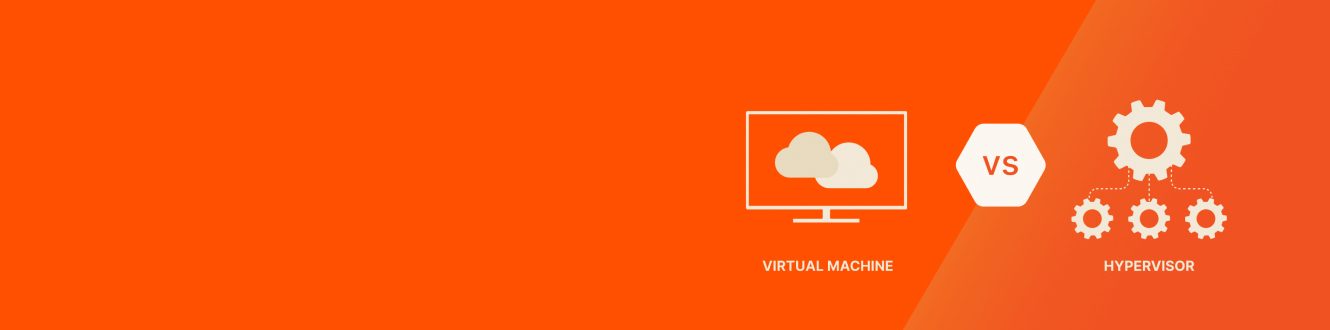
Virtual Machines vs. Hypervisors: What’s the Difference?

As the majority of businesses now use server virtualization daily, understanding the fundamental difference between virtual machines (VMs) and hypervisors has become critical for IT professionals.

Virtualization optimizes resources, improves scalability, and enhances flexibility within IT environments. Two key components of virtualization are virtual machines and hypervisors. While these terms are often used together, or even interchangeably, they refer to distinct concepts that serve different roles in the virtualization processes. 

Read on to learn what virtual machines and hypervisors are, explore their differences, and discover how each contributes to the virtualization ecosystem.

What Is a Hypervisor?

A hypervisor is specialized software or firmware that enables the creation and management of VMs on a host system. Its primary role is to allow multiple operating systems to run simultaneously on a single physical machine, sharing hardware resources like CPU, memory, and storage. The hypervisor creates a virtualized environment where each virtual machine operates independently as if it had dedicated hardware.

The Role of a Hypervisor in Virtualization

The hypervisor acts as the intermediary between the physical hardware and the virtual machines. It abstracts the underlying hardware resources and allocates them dynamically to VMs based on their needs. This allows for better resource utilization, scalability, and isolation of environments. Essentially, hypervisors enable organizations to consolidate workloads on fewer physical machines, reducing costs and simplifying IT management.

Types of Hypervisors

Bare Metal 

A bare metal hypervisor runs directly on the host's physical hardware without needing an underlying operating system. It is often used in enterprise data centers and is known for its performance and efficiency because it has direct access to the hardware. Examples include VMware vSphere/ESXi (supports up to 768 logical processors), Microsoft Hyper-V (supports up to 512 logical processors), and XenServer.

Hosted

A hosted hypervisor runs on top of a standard operating system (such as Windows or Linux) and relies on the host OS to interact with the hardware. It’s generally used in smaller-scale environments, such as personal computers for testing or development purposes.

Hosted hypervisors are typically less efficient than bare metal hypervisors due to the added layer, but are easier to set up and more accessible for casual users.

Examples include VMware Workstation, Oracle VirtualBox, and Parallels Desktop (for macOS).

What Is a Virtual Machine?

A VM is a software-based emulation of a physical computer that runs an OS and applications just like a physical machine. Instead of relying on dedicated hardware, though, it operates within a virtualized environment and uses a hypervisor to share the resources of the underlying physical hardware (host machine) with other VMs.

How Virtual Machines Work

Virtual machines rely on virtualization, a technology that allows one physical machine to be divided into multiple isolated environments. The hypervisor creates these environments by abstracting the physical hardware components (such as CPU, memory, and storage) and presenting them to each VM as if they were dedicated resources. This abstraction enables multiple VMs to run simultaneously on a single physical host, each with its own operating system and software, independent of the others.

Each VM is essentially a complete computing system in its own right, with its own virtual CPU, memory, storage, and network interfaces. This separation ensures that applications running in one VM do not affect others, providing isolation, flexibility, and enhanced security.

Common Uses of Virtual Machines across Industries

Here are some use cases for virtual machines:

  • Server consolidation: Organizations use VMs to consolidate multiple workloads onto fewer physical servers. This reduces hardware costs, energy consumption, and maintenance.
  • Testing and development: Developers use VMs to test software across different operating systems and configurations without needing multiple physical machines. VMs make it easy to create, clone, and destroy test environments quickly.
  • Disaster recovery: VMs can be easily backed up and restored, making them useful for disaster recovery plans. A snapshot of a VM can be stored and restored in the event of hardware failure or data loss.
  • Cloud computing: Cloud providers like AWS, Microsoft Azure, and Google Cloud rely on virtual machines to offer scalable, on-demand infrastructure. Customers can run their applications in VMs without worrying about the underlying physical hardware.
  • Application isolation: VMs allow businesses to run legacy applications on older operating systems within a modern infrastructure, helping them maintain compatibility without affecting the main system.

Key Differences between Virtual Machines and Hypervisors

VMs and hypervisors differ in several key ways:

Parallel vs. Distributed Computing: At a Glance

                                                                                 Aspect

                                                                                      Virtual Machine (VM)

                                                               Hypervisor

Definition

Software emulation of a physical computer

Software layer that creates and manages VMs

Function

Runs OS and applications independently

Allocates hardware resources to VMs

Position in Stack

Runs on top of hypervisor

Sits between hardware and VMs

Resource Usage

Consumes allocated CPU, RAM, storage

Manages and distributes resources

Examples

Windows VM, Ubuntu VM, CentOS VM

VMware ESXi, Hyper-V, KVM, VirtualBox

Security Role

Provides application isolation

Controls VM isolation and access

Slide

Functionality

VMs are the end products of the virtualization process, designed to emulate full systems that operate independently. Hypervisors, on the other hand, are the software or firmware that creates, manages, and allocates resources to virtual machines in virtualized environments. 

Security 

VMs provide a degree of isolation, meaning that if one VM is compromised, it generally won't affect others or the host system. This makes them a useful tool for running untrusted applications or maintaining different environments (e.g., production versus testing) on the same physical machine. However, VM “escape attacks”—where a malicious VM breaks out and gains access to the host—are a potential risk. Security depends on how well the hypervisor isolates and manages each VM.

Hypervisors, on the other hand, are designed with strong security controls as they directly manage the hardware and VMs. However, they’re a critical part of the virtualization stack, and any vulnerability in the hypervisor itself can have far-reaching security consequences (e.g., compromising all VMs running on it). Bare metal hypervisors are generally more secure because they minimize the attack surface by eliminating the host OS layer. 

Benefits of Virtual Machines

VMs offer numerous advantages in modern computing environments, enabling flexibility, resource optimization, and improved security. They help businesses save on hardware procurement, power, and cooling costs by allowing several VMs to share the same physical resources, such as CPU, memory, and storage. 

Also, resource allocation can be adjusted dynamically based on demand, ensuring optimal use of infrastructure. VMs can also be easily scaled up or down to meet changing workloads. They can be cloned, migrated, or adjusted without affecting other VMs or the host machine.

Potential Drawbacks and Limitations of Virtual Machines

While virtualization has become more efficient, VMs may still experience some performance overhead compared to running applications directly on physical hardware, especially in cases of high I/O or intensive resource demands.

When multiple VMs share the same physical host, there’s the potential for resource contention (e.g., CPU, memory), particularly if resources are not managed properly by the hypervisor.

Managing a large number of VMs, especially in enterprise environments, can become complex. Administering snapshots, backups, security patches, and monitoring resource usage requires robust management tools and expertise.

Finally, while VMs can reduce hardware costs, the software licenses for virtualization platforms, operating systems, and additional VM management tools can add up, especially for large-scale deployments.

Benefits of Hypervisors

Hypervisors enable more efficient use of physical hardware by allowing multiple VMs to share a single server’s resources. Hypervisors abstract the hardware layer, making the virtual machines independent of the underlying physical hardware. This abstraction simplifies hardware upgrades and migrations, as VMs can be easily moved to different physical servers without compatibility concerns.

Hypervisors also allow organizations to scale their computing resources efficiently. New VMs can be created or decommissioned as needed without purchasing additional physical servers. This ability to scale workloads up or down based on demand makes hypervisors ideal for dynamic environments. Hypervisors provide isolation between VMs, meaning that each VM operates in its own self-contained environment. If one VM is compromised or crashes, the others remain unaffected, enhancing security and stability. Hypervisors also make disaster recovery more efficient because VMs can be easily backed up, replicated, and restored. 

Potential Drawbacks and Limitations of Hypervisors

While hypervisors have become more efficient, they introduce some performance overhead due to the abstraction of physical hardware. Managing hypervisors in large-scale environments can be complex. Administrators must monitor resource allocation, security patches, VM sprawl (the uncontrolled creation of VMs), and hardware dependencies.

While hypervisors can save on hardware, enterprise-grade hypervisor solutions such as VMware vSphere or Microsoft Hyper-V may come with significant licensing and support costs. Additionally, businesses may need to invest in management software, backups, and disaster recovery tools.

Hypervisors are a critical part of the virtualization stack, and if compromised, they can expose all virtual machines running on the host to security risks. Vulnerabilities in the hypervisor can potentially allow attackers to gain control of the underlying physical hardware or other VMs (known as hypervisor escape).

Conclusion

Ultimately, whether you're a small business seeking to reduce hardware costs or an enterprise looking to improve operational efficiency, understanding how VMs and hypervisors function will help you select the best solution to meet your organization’s growing demands.

By understanding the key differences between VMs and hypervisors—such as resource management, performance, and security—businesses and IT professionals can make more informed decisions about which technology best suits their needs. While VMs offer flexibility and isolation, hypervisors provide a robust foundation for scalability, efficient resource utilization, and advanced features like live migration.

Learn more about how Pure Storage enables you to optimize your virtual desktop infrastructure

다음을 추천드립니다.

02/2026
Nutanix Cloud Platform with Everpure
Everpure and Nutanix partnered to offer the Nutanix Cloud Platform with Everpure FlashArray//X, //XL, and //C.
분석 보고서를 확인해보세요
12 pages

주요 유용한 자료 및 이벤트를 확인하세요

THOUGHT LEADERSHIP
혁신을 향한 레이스

스토리지 혁신의 최전선에 있는 업계 리더들의 최신 인사이트 및 관점을 확인하세요.

더 알아보기
동영상
동영상 시청: 엔터프라이즈 데이터 클라우드의 가치

찰스 쟌칼로(Charles Giancarlo) CEO가 전하는 스토리지가 아닌 데이터 관리가 미래인 이유 통합 접근 방식이 기업 IT 운영을 어떻게 혁신하는지 알아보세요

지금 시청하기
유용한 자료
레거시 스토리지는 미래를 지원할 수 없습니다.

현대적 워크로드에는 AI 지원 속도, 보안, 확장성이 필수입니다. 귀사의 IT 스택, 준비됐나요?

지금 확인하기
퓨어360(PURE260) 데모
퓨어스토리지를 직접 탐색하고, 배우고, 경험해보세요.

퓨어스토리지의 역량을 확인할 수 있는 온디맨드 비디오와 데모를 시청하세요.

데모영상 시청하기
지원하지 않는 브라우저입니다.

오래된 브라우저는 보안상 위험을 초래할 수 있습니다. 최상의 경험을 위해서는 다음과 같은 최신 브라우저로 업데이트하세요.

Personalize for Me
Steps Complete!
1
2
3
Personalize your Everpure experience
Select a challenge, or skip and build your own use case.
미래를 대비한 가상화 전략

모든 요구 사항에 맞는 스토리지 옵션.

모든 규모의 AI 프로젝트 지원

데이터 파이프라인, 교육 및 추론을 위한 고성능 스토리지

중요한 데이터 손실을 사전에 방지하세요.

비즈니스 리스크를 최소화하는 사이버 복원력 솔루션

클라우드 운영 비용 절감

Azure, AWS 및 프라이빗 클라우드를 위한 비용 효율적인 스토리지.

애플리케이션 및 데이터베이스 성능 가속화

로우 레이턴시 스토리지로 애플리케이션 성능을 극대화하세요.

데이터센터 전력 및 공간 사용량 절감

리소스 효율을 극대화하는 스토리지로 데이터센터 활용도를 최적화

Confirm your outcome priorities
Your scenario prioritizes the selected outcomes. You can modify or choose next to confirm.
Primary
Reduce My Storage Costs
Lower hardware and operational spend.
Primary
Strengthen Cyber Resilience
Detect, protect against, and recover from ransomware.
Primary
Simplify Governance and Compliance
Easy-to-use policy rules, settings, and templates.
Primary
Deliver Workflow Automation
Eliminate error-prone manual tasks.
Primary
Use Less Power and Space
Smaller footprint, lower power consumption.
Primary
Boost Performance and Scale
Predictability and low latency at any size.
What’s your role and industry?
We've inferred your role based on your scenario. Modify or confirm and select your industry.
Select your industry
Financial services
Government
Healthcare
Education
Telecommunications
Automotive
Hyperscaler
Electronic design automation
Retail
Service provider
Transportation
Which team are you on?
Technical leadership team
Defines the strategy and the decision making process
Infrastructure and Ops team
Manages IT infrastructure operations and the technical evaluations
Business leadership team
Responsible for achieving business outcomes
Security team
Owns the policies for security, incident management, and recovery
Application team
Owns the business applications and application SLAs
Describe your ideal environment
Tell us about your infrastructure and workload needs. We chose a few based on your scenario.
Select your preferred deployment
Hosted
Dedicated off-prem
On-prem
Your data center + edge
Public cloud
Public cloud only
Hybrid
Mix of on-prem and cloud
Select the workloads you need
Databases
Oracle, SQL Server, SAP HANA, open-source

Key benefits:

  • Instant, space-efficient snapshots

  • Near-zero-RPO protection and rapid restore

  • Consistent, low-latency performance


AI/ML and analytics
Training, inference, data lakes, HPC

Key benefits:

  • Predictable throughput for faster training and ingest

  • One data layer for pipelines from ingest to serve

  • Optimized GPU utilization and scale
Data protection and recovery
Backups, disaster recovery, and ransomware-safe restore

Key benefits:

  • Immutable snapshots and isolated recovery points

  • Clean, rapid restore with SafeMode™

  • Detection and policy-driven response


Containers and Kubernetes
Kubernetes, containers, microservices

Key benefits:

  • Reliable, persistent volumes for stateful apps

  • Fast, space-efficient clones for CI/CD

  • Multi-cloud portability and consistent ops
Cloud
AWS, Azure

Key benefits:

  • Consistent data services across clouds

  • Simple mobility for apps and datasets

  • Flexible, pay-as-you-use economics


Virtualization
VMs, vSphere, VCF, vSAN replacement

Key benefits:

  • Higher VM density with predictable latency

  • Non-disruptive, always-on upgrades

  • Fast ransomware recovery with SafeMode™


Data storage
Block, file, and object

Key benefits:

  • Consolidate workloads on one platform

  • Unified services, policy, and governance

  • Eliminate silos and redundant copies


What other vendors are you considering or using?
Thinking...
Your personalized, guided path
Get started with resources based on your selections.