Dismiss
Innovations
Everpure Simplifies Enterprise AI with Evergreen//One for AI and Data Stream Beta
Accelerate the transition from pilot to production with benchmark-proven performance, automated data pipelines, and a flexible consumption model.
Dismiss
June 16-18, Las Vegas
Pure Accelerate 2026
Discover how to unlock the true value of your data.
Dismiss
Innovation
A platform built for AI
Unified, automated, and ready to turn data into intelligence.
VDI vs. RDS vs. DaaS: Remote Desktop Solutions Demystified
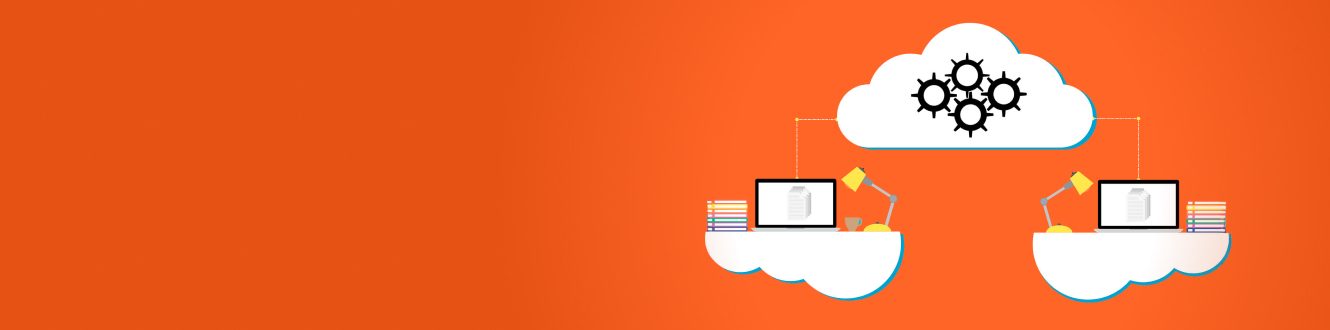
The rise of the hybrid workforce has brought a growing need for companies to securely support remote workers for operational agility and the ability to access a global talent pool. Virtual desktop infrastructure (VDI), remote desktop service (RDS), and desktop as a service (DaaS) are key technologies that support the remote workforce.
While they're all considered desktop virtualisation services, they have some key differences that are worth exploring. Let's compare and contrast VDI, RDS, and DaaS.
What Is VDI?
VDI is a technology that allows users to access and interact with a desktop operating system hosted on a virtual machine (VM) that runs on a server in a data centre. Instead of running the operating system and applications on a local computer, the desktop environment is hosted virtually, and users can access it remotely.
In addition to VMs, other key components of VDI include:
- Hypervisors: This is the software that enables the creation and management of virtual machines. It allows multiple virtual desktops to run on a single physical server.
- Connection brokers: The connection broker is responsible for directing user connections to the appropriate virtual desktop. It manages the assignment of virtual desktops to users and ensures a balanced distribution of resources.
- Remote display protocol: This is the communication protocol that enables the transfer of screen updates, keyboard, and mouse inputs between the user's device and the virtual desktop. Common protocols include Remote Desktop Protocol (RDP) and PCoIP (PC-over-IP).
VDI offers several benefits, including centralized management, improved security, and the ability to access desktops from various devices. It's commonly used in business environments where centralized control, security, and efficient resource utilization are extremely important. Users can access their desktop environments from thin clients, traditional PCs, or other devices, making it a flexible solution for organisations with diverse endpoint devices.
What Is RDS?
RDS is a Microsoft technology that allows users to access and use a Windows desktop environment remotely. It provides the infrastructure to enable secure communication between users and a Windows Server-based desktop or applications. RDS is often used in conjunction with VDI to deliver remote desktops and applications to users.
Key components of RDS include:
- Remote Desktop Session Host (RDSH): Formerly known as Terminal Server, RDSH is responsible for hosting Windows sessions and applications for remote users. It allows multiple users to log into the server simultaneously and run their desktop sessions or individual applications.
- Remote Desktop Connection Broker (RD Connection Broker): This component is responsible for directing and load-balancing user connections to the appropriate session host server. It ensures that users are connected to their existing sessions and can distribute the load across multiple servers in a farm.
- Remote Desktop Web Access (RD Web Access): This web-based portal allows users to access their remote desktops and applications through a web browser. It provides a user-friendly interface for launching applications or connecting to virtual desktops.
- Remote Desktop Gateway (RD Gateway): This component enables secure remote access to RDS resources over the internet by utilizing the Remote Desktop Protocol (RDP) over HTTPS. It acts as a gateway, providing a secure connection for remote users.
- Remote Desktop Virtualisation Host (RD Virtualisation Host): This component is used in conjunction with Hyper-V to provide VDI capabilities. It allows virtual machines to be created and managed for individual users, providing a personalized virtual desktop experience.
RDS is widely used in business environments where organisations need to provide remote access to Windows-based applications and desktops. It helps in centralizing desktop management, improving security, and ensuring a consistent user experience across different devices. RDS is available in various editions of Windows Server, with features and capabilities varying based on the specific edition.
What Is DaaS? Understanding Desktop as a Service
Definition and Cloud-native Architecture
Desktop as a service (DaaS) represents the evolution of desktop virtualisation into a cloud-native, subscription-based model where third-party providers deliver virtual desktops over the internet. DaaS provides VDI functionality without the infrastructure ownership, management overhead, or capital investment, transforming desktop delivery into an operational expense.
DaaS leverages hyperscale cloud infrastructure from providers like AWS, Microsoft Azure, or Google Cloud to deliver elastic, on-demand desktop resources. This cloud-first approach enables capabilities impossible with on-premises solutions, including global availability, instant scalability, and consumption-based pricing.
DaaS Deployment Models
Public DaaS: Major cloud providers offer DaaS solutions like Amazon WorkSpaces, Azure Virtual Desktop (formerly Windows Virtual Desktop), and Google Cloud VDI. These multi-tenant platforms provide economies of scale, global infrastructure, and integrated cloud services.
Private DaaS: This dedicated cloud infrastructure for single organisations provides cloud benefits while maintaining isolation. It’s suitable for enterprises with strict compliance requirements or unique security needs.
Hybrid DaaS: Combining on-premises infrastructure with cloud resources, hybrid DaaS enables organisations to maintain sensitive workloads locally while leveraging cloud elasticity for scaling. This model provides migration flexibility and addresses data sovereignty concerns.
DaaS Architecture Components
Multi-tenant infrastructure: DaaS providers leverage shared infrastructure across multiple customers, using logical isolation to maintain security and performance boundaries. This multi-tenancy enables providers to achieve economies of scale impossible with dedicated infrastructure.
Elastic resource pools: Cloud-native architecture enables instant provisioning and de-provisioning of desktop resources. Organisations can scale from tens to thousands of desktops in minutes, paying only for active resources.
Global edge networks: DaaS providers utilize content delivery networks and edge locations to minimize latency. Users connect to the nearest point of presence, ensuring optimal performance regardless of geographic location.
Integrated security stack: Modern DaaS platforms include built-in security features like encryption at rest and in transit, DDoS protection, identity management, and compliance certifications. This shared responsibility model reduces the security burden on customer IT teams.
DaaS Benefits and Advantages
Zero capital investment: DaaS eliminates upfront infrastructure costs, converting desktop delivery to predictable monthly operational expenses. This OPEX model can help improve cash flow and eliminate technology refresh cycles.
Instant scalability: Cloud elasticity enables organisations to provision hundreds of desktops in minutes for seasonal workers, contractors, or mergers and acquisitions. Scaling down is equally simple, ensuring you never pay for unused capacity.
Reduced IT burden: The service provider handles infrastructure management, including hardware maintenance, capacity planning, disaster recovery, and platform updates. This allows IT teams to focus on strategic initiatives rather than infrastructure management.
Global accessibility: DaaS provides consistent desktop experiences from any location with internet connectivity. Built-in geo-redundancy and multiple availability zones ensure high availability and disaster recovery.
Predictable performance: Service level agreements (SLAs) guarantee uptime and performance metrics. Providers maintain excess capacity and automated failover, delivering reliability difficult to achieve with on-premises infrastructure.
DaaS Challenges and Considerations
Ongoing subscription costs: While eliminating CAPEX, DaaS monthly fees can exceed on-premises TCO for stable, long-term deployments. Organisations must carefully model costs based on usage patterns.
Internet dependency: DaaS requires reliable, high-bandwidth internet connectivity. Organisations with poor connectivity or remote locations may experience performance issues impacting user productivity.
Data sovereignty concerns: Storing data in public cloud infrastructure raises compliance and sovereignty issues for certain industries and geographic regions. Understanding where data resides and applicable regulations is critical.
Vendor lock-in: Migrating between DaaS providers or back to on-premises infrastructure can be complex and costly. Organisations should evaluate exit strategies before committing to a provider.
Limited customization: Multi-tenant platforms may restrict certain configurations or customizations available with on-premises solutions. Organisations with unique requirements should verify platform capabilities.
DaaS Total Cost of Ownership
DaaS TCO depends on usage patterns, selected features, and provider pricing:
Monthly Costs per User:
- Basic desktop (2 vCPU, 4GB RAM): $25-$35
- Standard desktop (2 vCPU, 8GB RAM): $35-$50
- Power user desktop (4 vCPU, 16GB RAM): $60-$100
- Graphics workstation (GPU-enabled): $150-$300
Additional Monthly Costs:
- Storage (beyond included): $0.10-$0.30 per GB
- Backup and disaster recovery: $5-$10 per user
- Premium support: $10-$20 per user
- Security and compliance features: $5-$15 per user
5-year TCO: Approximately $2,000-$4,000 per user (standard desktop)
Comprehensive Comparison: VDI vs. RDS vs. DaaS
Performance and User Experience Comparison
VDI Performance Characteristics:
- Dedicated resources ensure consistent performance
- Supports GPU acceleration for graphics-intensive applications
- Typical latency: 10-30ms on premises, 30-50ms remote
- User density: 15-30 VMs per host server
- Best for: Power users, developers, designers, data analysts
RDS Performance Characteristics:
- Shared resources may cause variable performance
- Limited graphics acceleration capabilities
- Typical latency: 5-20ms on premises, 25-40ms remote
- User density: 50-100 sessions per server
- Best for: Task workers, office productivity, standard applications
DaaS Performance Characteristics:
- Cloud-optimised infrastructure with auto-scaling
- GPU options available at premium pricing
- Typical latency: 20-60ms depending on location
- Unlimited scalability with pay-per-use model
- Best for: Distributed teams, seasonal workers, BYOD scenarios
Security and Compliance Analysis
VDI Security Profile:
- Complete control over data location and access
- Granular security policies per VM
- Supports air-gapped and highly restricted environments
- Ideal for: HIPAA, PCI-DSS, government classifications
RDS Security Profile:
- Centralized security management
- Session isolation within shared OS
- Simplified patching and updates
- Suitable for: General business, moderate compliance requirements
DaaS Security Profile:
- Shared responsibility model with provider
- Built-in encryption and compliance certifications
- Automated security updates and patches
- Appropriate for: Most commercial applications, standard compliance
Scalability and Flexibility Comparison
VDI Scalability Model:
- Requires capacity planning and procurement cycles
- Scaling involves hardware acquisition and deployment
- Timeline: Weeks to months for significant scaling
- Flexibility limited by physical infrastructure
RDS Scalability Model:
- Add RDSH servers to existing farm
- Limited by Windows Server session limits
- Timeline: Days to weeks for scaling
- Moderate flexibility within infrastructure constraints
DaaS Scalability Model:
- Instant provisioning and de-provisioning
- Elastic scaling based on demand
- Timeline: Minutes to hours for any scale
- Maximum flexibility with global reach
Implementation Strategies and Best Practices
VDI Implementation Best Practices
- Pilot program first: Begin with a 50-100 user pilot to validate performance, identify application issues, and refine user profiles. This controlled deployment reduces risk and provides metrics for full-scale planning.
- Storage architecture is critical: Implement all-flash storage or hybrid arrays with SSD caching to handle IOPS requirements. Plan for 20-30 IOPS per standard user, 50-100 IOPS for power users.
- Network optimisation: Deploy WAN optimisation and quality of service (QoS) policies to ensure consistent user experience. Consider SD-WAN for multi-site deployments.
- User segmentation: Create distinct desktop pools based on user requirements:
- Persistent desktops for developers and power users
- Non-persistent pools for task workers
- GPU-enabled pools for designers and engineers
- Monitoring and analytics: Implement comprehensive monitoring covering infrastructure health, user experience metrics, and resource utilization. Proactive monitoring prevents issues before they impact users.
RDS Implementation Best Practices
- Application compatibility assessment: Thoroughly test all applications in multi-user environments before deployment. Identify and remediate compatibility issues early.
- Resource planning: Size RDSH servers appropriately:
- Light users (Office apps): 20-30 users per server
- Medium users (mixed workload): 15-20 users per server
- Heavy users (data/graphics): 8-12 users per server
- High availability design: Implement redundant connection brokers, multiple RDSH servers, and load balancing to ensure service availability. Plan for N+1 redundancy minimum.
- Profile management: Deploy roaming profiles or profile virtualisation solutions to provide consistent user experiences across sessions while minimizing login times.
- Published applications strategy: Consider RemoteApp for specific application delivery rather than full desktops when appropriate, reducing resource consumption.
DaaS Implementation Best Practices
- Connectivity assessment: Validate internet bandwidth and latency for all user locations. Plan for 150-300Kbps per standard user, 1-2Mbps for multimedia users.
- Identity integration: Implement single sign-on (SSO) and multi-factor authentication (MFA) integration with existing identity providers for seamless, secure access.
- Cost optimisation:
- Use reserved instances for predictable workloads (30%-50% savings)
- Implement auto-scaling policies for variable demand
- Right-size desktop configurations based on actual usage
- Data locality planning: Understand data residency requirements and choose appropriate regions. Consider hybrid deployment for sensitive data requiring on-premises storage.
- Change management: Develop comprehensive training and communication plans. DaaS often requires adjusting IT processes and user expectations.
Migration Strategies and Considerations
Migrating to VDI
Assessment Phase:
- Inventory existing desktop hardware and software
- Analyse application dependencies and compatibility
- Calculate IOPS and storage requirements
- Evaluate network capacity and latency
Migration Approaches:
- Big bang: Rapid migration over a weekend (high risk, fast transition)
- Phased rollout: Department by department migration (lower risk, longer timeline)
- Hybrid coexistence: Maintain physical and virtual desktops temporarily (highest cost, lowest risk)
Common Challenges and Solutions:
- Application compatibility: Use application virtualisation or published apps for problematic software
- User resistance: Offer extensive training and champion programs
- Performance issues: Proper sizing and storage optimisation
- Peripheral support: USB redirection and driver management
Migrating to RDS
Pre-migration Tasks:
- Test all applications for Terminal Services compatibility
- Plan server farm architecture and redundancy
- Design Group Policy for session management
- Establish licencing requirements (CALs)
Migration Path:
- Deploy RDS infrastructure parallel to existing environment
- Migrate pilot users while maintaining fallback options
- Gradually transition remaining users
- Decommission legacy infrastructure
Key Success Factors:
- Thorough application testing and remediation
- Proper server sizing to prevent resource contention
- User training on session-based computing differences
- Profile management strategy implementation
Migrating to DaaS
Cloud Readiness Assessment:
- Evaluate internet connectivity at all locations
- Review security and compliance requirements
- Analyse data egress costs and patterns
- Assess application cloud compatibility
Migration Strategies:
- Lift and shift: Direct migration of existing desktop configurations
- Optimise and migrate: Re-architect for cloud-native capabilities
- Hybrid extension: Extend on premises with cloud overflow
Risk Mitigation:
- Maintain on-premises backup during transition
- Implement staged migration with rollback capability
- Establish SLA agreements with providers
- Plan for internet redundancy and failover
Decision Framework: Choosing the Right Solution
Step 1: Assess Your Requirements
User Requirements:
- Number of users and growth projections
- Geographic distribution of workforce
- Application types and complexity
- Performance sensitivity
- Personalization needs
Technical Requirements:
- Existing infrastructure and expertise
- Integration with current systems
- Network capabilities and constraints
- Storage and compute requirements
- Disaster recovery objectives
Business Requirements:
- Budget constraints (CAPEX vs. OPEX preference)
- Compliance and regulatory obligations
- Security and data sovereignty needs
- Time to deployment urgency
- Scalability and flexibility priorities
Step 2: Evaluate Organizational Readiness
For VDI Success, You Need:
- Strong virtualisation expertise
- Significant capital budget
- Dedicated IT team for management
- Time for complex implementation
- Long-term, stable user base
For RDS Success, You Need:
- Windows-centric environment
- Standard application portfolio
- Cost-conscious approach
- Moderate IT expertise
- Predictable user patterns
For DaaS Success, You Need:
- Reliable internet connectivity
- Comfort with cloud services
- Variable or growing workforce
- Limited IT resources
- OPEX budget flexibility
Step 3: Calculate Total Cost of Ownership
Include All Cost Factors:
- Initial infrastructure or setup costs
- Licencing (perpetual vs. subscription)
- Ongoing operations and maintenance
- Staff training and expertise
- Migration and transition expenses
- End-user devices and peripherals
- Network upgrades if required
- Disaster recovery and backup
Step 4: Decision Matrix Scoring
Create a weighted scoring matrix based on your priorities:
(Scores: 1=Poor, 5=Excellent)
Step 5: Consider Hybrid Approaches
Many organisations benefit from combining solutions:
- VDI + RDS: VDI for power users, RDS for task workers
- VDI + DaaS: On premises for sensitive data, cloud for scalability
- RDS + DaaS: RDS for stable workloads, DaaS for overflow
- All three: Different solutions for different business units
Industry-specific Considerations
Financial Services
Requirements:
- Ultra-low latency for trading applications
- Strict regulatory compliance (SOX, GDPR, MiFID II)
- Data sovereignty and residency
- High availability and disaster recovery
Recommended Approach:
- Primary: VDI for trading floors and sensitive operations
- Secondary: Private DaaS for back-office functions
- Considerations: Implement dedicated infrastructure for critical systems
Healthcare
Requirements:
- HIPAA compliance and patient data protection
- Integration with electronic health records (EHR)
- Support for medical imaging applications
- 24x7 availability for clinical staff
Recommended Approach:
- Primary: VDI for clinical workstations
- Secondary: RDS for administrative staff
- Considerations: Ensure solution supports medical peripherals and imaging
Education
Requirements:
- Cost-effective scaling for student populations
- Seasonal demand fluctuations
- Diverse application requirements
- BYOD support
Recommended Approach:
- Primary: RDS for computer labs and standard coursework
- Secondary: DaaS for distance learning and temporary access
- Considerations: Academic licencing and student privacy requirements
Manufacturing
Requirements:
- CAD/CAM application support
- Shop floor access with ruggedized devices
- Integration with industrial systems
- Intellectual property protection
Recommended Approach:
- Primary: VDI for engineering workstations
- Secondary: RDS for office and production planning
- Considerations: GPU requirements for 3D modeling and simulation
How Everpure Accelerates Your Desktop Virtualisation Journey
Solving VDI Storage Challenges
Everpure FlashArray™ delivers the performance and efficiency required for successful VDI deployments:
Guaranteed performance: All-flash architecture eliminates storage bottlenecks with consistent sub-millisecond latency, supporting 100,000+ IOPS for even the most demanding VDI environments. This ensures smooth user experiences during login storms and peak usage periods.
Data reduction: Industry-leading data reduction rates of 5:1 to 10:1 for VDI workloads through inline deduplication and compression dramatically reduce storage costs while improving performance.
Evergreen® subscription: Non-disruptive upgrades and expansion ensure your VDI infrastructure evolves without downtime or data migrations, protecting your investment while maintaining continuous availability.
Optimizing RDS Deployments
Everpure enhances RDS implementations through:
Simplified management: Pure1® AI-driven management predicts and prevents issues before they impact users, reducing administrative overhead for stretched IT teams.
Instant recovery: SafeMode™ Snapshots provide immutable backups for rapid recovery from ransomware or data corruption, critical for shared RDS environments where issues affect multiple users simultaneously.
Predictable scaling: Elastic scalability allows you to add capacity instantly without performance impact, supporting growing RDS farms without architectural changes.
Enabling Hybrid DaaS Strategies
Everpure Cloud enables seamless hybrid cloud strategies:
Consistent experience: Run the same Purity operating environment on premises and in AWS or Azure, simplifying management and enabling workload mobility.
Cloud integration: Native cloud integration enables DaaS burst capacity while keeping sensitive data on premises, balancing security requirements with cloud flexibility.
Cost optimisation: Efficient data services reduce cloud storage costs by up to 50%, making hybrid DaaS deployments economically viable.
Everpure Advantages for Desktop Virtualisation
Validated designs: Proven reference architectures for VMware Horizon, Citrix Virtual Apps and Desktops, and Microsoft RDS eliminate deployment risk and accelerate time to value.
Guaranteed business outcomes: Service level agreements for availability, performance, and support ensure your desktop virtualisation initiative succeeds.
Sustainability: Reduce data centre footprint by up to 85% with industry-leading power efficiency, supporting environmental initiatives while reducing operational costs.
Future Trends and Considerations
Emerging Technologies
AI-powered optimisation: Machine learning algorithms will automatically adjust resource allocation, predict capacity needs, and optimise user experience based on usage patterns.
Edge computing integration: Desktop virtualisation at the edge will reduce latency for remote locations while maintaining centralized management.
Container-based desktops: Containerized desktop delivery promises faster provisioning and greater density than traditional VMs.
Market Evolution
DaaS market growth: IDC predicts DaaS adoption will grow 25% annually through 2028 as organisations embrace cloud-first strategies.
Hybrid work permanence: 70% of organisations plan to maintain hybrid work indefinitely, driving continued investment in desktop virtualisation.
Security-first architecture: Zero-trust security models will become standard, with desktop virtualisation as a key component.
Conclusion
VDI, RDS, and DaaS cater to remote work but differ in deployment and ownership. VDI is on premises, single tenant, and capital-intensive. RDS is flexible with on-premises or cloud deployment, supporting both tenant models. DaaS, cloud-native and multi-tenant, follows a subscription-based, OPEX approach, minimizing upfront costs.
Despite differences, all three provide remote access, centralized management, scalability, and device independence, with VDI and RDS offering more control, and DaaS streamlining responsibilities by outsourcing to the service provider. Organisations should consider these distinctions for informed decision-making based on their preferences and requirements.
Browse key resources and events

TRADESHOW
Pure Accelerate 2026
Save the date. June 16-19, 2026 | Resorts World Las Vegas
Get ready for the most valuable event you’ll attend this year.
PURE360 DEMOS
Explore, learn, and experience Everpure.
Access on-demand videos and demos to see what Everpure can do.
VIDEO
Watch: The value of an Enterprise Data Cloud
Charlie Giancarlo on why managing data—not storage—is the future. Discover how a unified approach transforms enterprise IT operations.

RESOURCE
Legacy storage can’t power the future
Modern workloads demand AI-ready speed, security, and scale. Is your stack ready?
Personalize for Me