Dismiss
Innovations
Everpure Simplifies Enterprise AI with Evergreen//One for AI and Data Stream Beta
Accelerate the transition from pilot to production with benchmark-proven performance, automated data pipelines, and a flexible consumption model.
Dismiss
June 16-18, Las Vegas
Pure Accelerate 2026
Discover how to unlock the true value of your data.
Dismiss
Innovation
A platform built for AI
Unified, automated, and ready to turn data into intelligence.
What Is Exascale Computing? Understanding the Next Frontier of Supercomputing
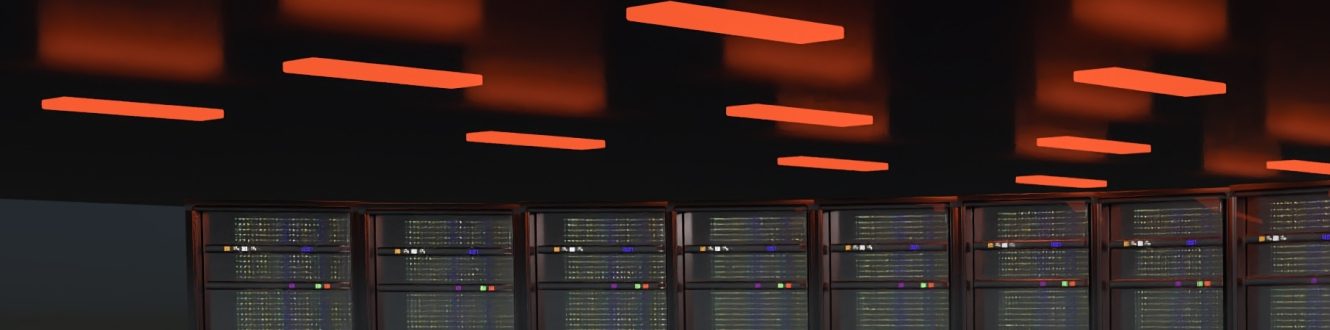
Exascale computing represents a monumental leap in computational power, enabling scientists and researchers to tackle problems once deemed impossible.
These systems, capable of performing 1 quintillion calculations per second (or 1 exaflop), are not just faster versions of existing supercomputers—they’re transformative tools reshaping fields like climate science, healthcare, and astrophysics. By combining unprecedented processing speeds with advanced algorithms, exascale computers are unlocking new frontiers in simulation, prediction, and discovery.
Read on to explore what makes this technology revolutionary—and why it matters.
From Petascale to Exascale: The Evolution of Supercomputing
The journey to exascale began with a simple question: How can we solve bigger problems faster? For decades, supercomputers operated at the petascale level (10^15 operations per second), but as scientific challenges grew more complex—from modeling climate systems to simulating molecular interactions—the limitations became apparent.
Exascale systems, which are 1,000 times more powerful than their petascale predecessors, emerged as the solution to this computational bottleneck. The first official exascale machine, Frontier, was launched in 2022 at Oak Ridge National Laboratory and marked a turning point. With a peak performance of 1.6 exaflops, Frontier demonstrated that exascale wasn’t just theoretical—it was achievable.
Today, systems like Aurora (Argonne National Laboratory) and El Capitan (Lawrence Livermore National Laboratory) are pushing boundaries further, with speeds exceeding 2 exaflops.
Breaking Down the Tech: How Exascale Systems Work
Unlike classical computers, which rely solely on CPUs, exascale architectures leverage GPU acceleration to handle massively parallel tasks—a necessity for processing quintillion-scale data sets. In fact, exascale computers require thousands of CPUs and GPUs working in tandem, housed in facilities the size of warehouses. For instance, Frontier uses over 9,400 nodes, 10,000 CPUs, and 38,000 GPUs to achieve its record-breaking performance.
Early exascale prototypes faced a critical hurdle: power consumption. Initial designs predicted energy demands equivalent to 50 households—a figure reduced to more sustainable levels through innovations like liquid cooling and optimized chip designs. Modern systems like Frontier now operate at 15-20 megawatts, balancing raw power with environmental considerations.
But hardware alone isn’t enough. Traditional programming models struggle to utilize thousands of GPUs efficiently. To address this, projects like MIT’s Angstrom and the DOE’s Exascale Computing Project (ECP) are rethinking software architectures. Tools like Kokkos and OpenMP enable developers to write code that dynamically adapts to GPU and CPU workloads, ensuring applications can scale across millions of processing cores.
Real-world Applications: Where Exascale Makes a Difference
Now, let’s look at a few areas where exascale computing could lead to big breakthroughs.
Climate Modeling and Renewable Energy
Exascale systems are revolutionizing our understanding of climate change. By simulating atmospheric processes at resolutions down to 1 kilometer (versus 100km in older models), researchers can predict regional weather extremes and optimize renewable energy grids with unprecedented accuracy. For example, MIT’s CESMIX center uses exascale-ready algorithms to study materials for carbon capture—a critical step toward achieving net-zero emissions.
Healthcare and Precision Medicine
In drug discovery, exascale simulations reduce the time needed to analyze molecular interactions from years to days. Researchers at Argonne National Laboratory are leveraging the Aurora supercomputer to model protein folding and identify potential cancer therapies, accelerating the path from lab bench to bedside.
Unlocking the Secrets of the Universe
Dark matter—the invisible substance constituting 85% of the universe’s mass—remains one of physics’ greatest mysteries. Using Aurora, MIT physicists are running machine learning-enhanced simulations to predict how dark matter interacts with visible matter, potentially reshaping our cosmic understanding.
The Exascale Market: Growth and Economic Impact
The global exascale computing market, valued at $4.05 billion in 2023, is projected to reach $25.9 billion by 2031, driven by demand in academia, healthcare, and national security.
Governments worldwide are investing heavily:
- The U.S. Department of Energy has funded exascale initiatives since 2008, culminating in systems like Frontier and El Capitan.
- Europe’s Jupiter supercomputer, launched in 2024, aims to advance quantum materials research.
- China reportedly operates multiple exascale systems for aerospace and AI applications.
Companies like NVIDIA are partnering with U.S. national labs to co-design exascale hardware. This synergy ensures that commercial technologies (e.g., AI accelerators) benefit from cutting-edge research—and vice versa.
The Road Ahead: Challenges and Future Directions
While exascale is transformative, scientists are already eyeing the next milestone: zettascale (10^21 operations per second).
Achieving zettascale will require:
- New materials: Silicon-based chips are nearing physical limits. MIT’s Angstrom project explores 2D semiconductors and photonic computing to reduce energy use.
- Quantum integration: Hybrid systems combining classical exascale and quantum processors could solve optimization problems that are intractable for either alone.
- Ethical AI: As machine learning permeates exascale workflows, ensuring unbiased algorithms becomes critical—a focus area for MIT’s Schwarzman College of Computing.
Current exascale systems consume megawatts of power, raising questions about long-term viability. Innovations like neuromorphic chips (which mimic the brain’s efficiency) and energy-efficient data centers are key to sustainable growth.
Conclusion: Exascale as a Catalyst for Discovery
Exascale computing isn’t just about speed—it’s about possibility. From simulating galaxy formation to helping with the design of life-saving drugs, these systems are expanding the boundaries of human knowledge. They’re enabling us to not just solve equations faster but also ask questions we couldn’t even frame before—and that will lead to unimaginable breakthroughs. For industries and researchers alike, the exascale era promises a future where the most complex challenges become solvable—one quintillion calculations at a time.
We Also Recommend...
Browse key resources and events

TRADESHOW
Pure Accelerate 2026
June 16-18, 2026 | Resorts World Las Vegas
Get ready for the most valuable event you’ll attend this year.

PURE360 DEMOS
Explore, learn, and experience Everpure.
Access on-demand videos and demos to see what Everpure can do.

VIDEO
Watch: The value of an Enterprise Data Cloud
Charlie Giancarlo on why managing data—not storage—is the future. Discover how a unified approach transforms enterprise IT operations.

RESOURCE
Legacy storage can’t power the future
Modern workloads demand AI-ready speed, security, and scale. Is your stack ready?
Personalize for Me