Dismiss
Innovations
Everpure Simplifies Enterprise AI with Evergreen//One for AI and Data Stream Beta
Accelerate the transition from pilot to production with benchmark-proven performance, automated data pipelines, and a flexible consumption model.
Dismiss
June 16-18, Las Vegas
Pure Accelerate 2026
Discover how to unlock the true value of your data.
Dismiss
Innovation
A platform built for AI
Unified, automated, and ready to turn data into intelligence.
What Is a Main Distribution Frame (MDF) Room?
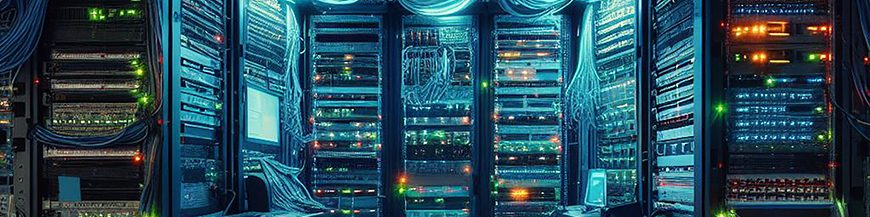
In IT, a main distribution frame (MDF) room often serves as a nerve center of a building's telecommunications network. It ensures seamless and efficient network connectivity and is crucial for managing complex network infrastructures. In this article, we’ll look at the essential aspects of MDF rooms, the concept of centralized networking, and best practices for optimal setup.
What Is a Main Distribution Frame (MDF) Room?
An MDF room is like a central network hub for enterprise office complexes or campuses where various communication lines converge. MDF rooms play a fundamental role in maintaining organized network connections, allowing for swift and effective data transmission between communication devices, such as telephone lines, data cables, and internet connections.
In simpler terms, an MDF room consolidates incoming and outgoing communication lines within a building or a campus. The main distribution frame itself is a panel or a set of panels where all the communication cables from different parts of the building are terminated and connected. From the MDF room, cables can be routed out to individual offices or rooms via intermediate distribution frames (IDFs) or network switches.
The concept of centralizing and managing network communications is the real key here—and a principle that stretches beyond the specific use case of MDF. Keep this in mind as we dig deeper.
Components of an MDF Room
Several key components work together to create a well-organized network infrastructure—in an MDF room and otherwise. These can include:
- Networking switches or routers: These connect various devices within a local area network (LAN), receiving data packets from connected devices and forwarding them to intended destinations. This enables efficient communication between computers, servers, printers, and other networked devices.
In the context of an MDF room, switches are typically used to interconnect different segments of the network within a building or campus and manage the flow of data. Configuration and size of switches in an MDF room will depend on the network and the scale of the organization. Large enterprise environments may use high-capacity, managed switches to handle a significant volume of network traffic and provide advanced features like virtual local area networks (VLANs) and quality of service (QoS) settings for optimizing network performance.
- Patch panels: Patch panels act as interfaces between external lines and internal network devices, facilitating easy connection and disconnection. They allow for easy and quick changes to network connections without disrupting the entire network.
- Racks: Racks provide secure housing for servers, switches, routers, and other network equipment, optimizing space and accessibility.
- Cable management systems: Cable management systems ensure neat arrangement and proper routing of cables, reducing the risk of damage, tangling, and clutter and enhancing overall efficiency.
- Labeling systems: Labels clearly and accurately identify cables, ports, and devices, simplifying the process of tracing and troubleshooting network connections.
- Grounding and bonding equipment: Properly grounding an MDF can help to reduce the risk of electrical issues and improve safety.
- Power distribution units (PDUs): PDUs distribute electrical power to networking equipment within the MDF room. They often include surge protection and monitoring features to enhance safety and reliability.
- Fire suppression systems: Fire extinguishers, sprinklers, or advanced suppression technologies like clean agents help prevent damage from fire.
- Security measures: Access control systems, biometric scanners, surveillance cameras, and alarms help restrict access to authorized personnel only.
- Backup power supply: Uninterruptible power supplies (UPS) or backup generators provide temporary power in case of electrical outages, preventing network disruptions and data loss.
- Cooling systems: Cooling systems, including air conditioning units and ventilation systems, maintain the appropriate temperature and humidity levels to prevent networking equipment from overheating.
Documentation and network maps: These help IT professionals understand the layout of the MDF room or networking hub within a data center, aiding with troubleshooting.
Importance of MDF Rooms and Centralized Networking to Data Centers
Data centers often have similar components to main distribution frame (MDF) rooms, although they might be referred to by different names. Data centers will often have distribution frames or distribution points where various communication lines converge, similar to the function of an MDF room in other types of buildings. But in a data center environment, it’s more about centralizing network connections and managing them efficiently. Vast amounts of information constantly flow in and out of data centers, making uninterrupted network connectivity crucial.
Speaking of interruptions—centralizing network connections helps networking and IT professionals by simplifying how they identify and troubleshoot issues and regular maintenance. This leads to increased reliability and reduced downtime, which are critical to data center operations.
The principles that are most applicable to data center operations include:
- Connectivity: Data centers handle a vast amount of network connections between servers, storage devices, networking equipment, and external networks. Centralizing these lines in one area ensures efficient connectivity.
- Organization: Cable organization and management is essential to maintain a neat and accessible infrastructure. Patch panels and racks can keep the environment tidy, reduce clutter, and simplify troubleshooting.
- Redundancy and resilience: Data centers often implement redundant systems to ensure high availability. Having a centralized point for managing connections allows for the implementation of redundant network paths and backup systems, enhancing data infrastructure resilience.
How to Set Up an MDF Room
If you’re new to networking, note that this is only a general guide. Earning a general IT networking certification that covers topics related to network infrastructure design, cabling, and management is an important first step. Some certifications that IT professionals often pursue to enhance their skills in networking and infrastructure management include:
CompTIA Network+: Covering networking concepts from network installations and network operations to network security, troubleshooting, and network infrastructure, this provides a solid foundation relevant to MDF setup.
Cisco Certified Network Associate (CCNA): This certification covers various networking topics, including network fundamentals, network access, IP connectivity, IP services, security fundamentals, and automation and programmability.
BICSI Credentials: BICSI (Building Industry Consulting Service International) offers certifications related to information and communications technology (ICT), data center design, and infrastructure design.
Certified Data Centre Professional (CDCP): Focused on data center design, standards, and best practices, it’s not specific to MDF rooms but covers aspects of data center infrastructure design, which can be applicable.
Certified Data Centre Management Professional (CDCMP): This certification focuses on data center management, covering topics related to operations, security, and compliance. Data center management principles can be valuable when dealing with MDF rooms in data center environments.
Best Practices for Networking in an Enterprise MDF Room or Data Center
If you’re already a networking professional, you know that setting up an MDF room or similar networking operations requires careful planning and meticulous execution. You’ll likely be implementing many of the above-listed components and principles, including:
- Find a strategic location: Ensure that the MDF room setup complies with relevant industry standards, building codes, and regulations. Go for central and easily accessible, with proximity to telecommunication service entry points and easy access for technicians. Plan for growth, and ensure there’s enough space to accommodate current and future networking equipment.
- Ensure proper ventilation and cooling: Install adequate ventilation and cooling systems to maintain airflow, optimal temperature, and humidity levels to prevent networking equipment from overheating.
- Power and electrical: Uninterruptible power supplies (UPS) or backup generators can prevent network disruptions and ensure continuous operation. Ensure proper grounding and bonding of networking equipment to prevent electrical issues and enhance safety. Follow industry standards and regulations for grounding practices.
- Use structured cabling and documentation: Organized cable trays, conduits, and patch panels with color-coded and labeled cables simplify identification and troubleshooting. Maintain detailed documentation of the MDF room layout, including network diagrams, cable layouts, and equipment configurations. Proper documentation facilitates troubleshooting, modifications, and future expansions.
- Prioritize safety and security: Implement access control systems, biometric scanners, surveillance cameras, and alarms. Restrict access to authorized personnel only to protect sensitive networking equipment and data. Install an appropriate fire suppression system, such as fire extinguishers or sprinklers, to protect networking equipment from fire-related damage. Regularly inspect and maintain the fire suppression system.
- Backup and redundancy: Implement backup systems for critical components such as switches and routers. Redundant networking devices can automatically take over in case of a failure, ensuring continuous network operation.
- Maintenance: Schedule regular inspections, maintenance, and cleaning of networking equipment and the MDF room infrastructure. Regular maintenance helps identify potential issues before they escalate into problems.
Conclusion
MDF rooms are all about robust and reliable network connectivity—but more important are how their core principles are applied to enterprise IT and modern data centers. By understanding these core components and best practices, IT professionals can create infrastructures that meet the demands of modern telecommunications.
Don’t let legacy storage infrastructure be the bottleneck for an effective MDF room. Embrace data mobility and a greener data center with the speed, reliability, and power of all-flash arrays by Everpure.
Browse key resources and events

TRADESHOW
Pure Accelerate 2026
June 16-18, 2026 | Resorts World Las Vegas
Get ready for the most valuable event you’ll attend this year.
PURE360 DEMOS
Explore, learn, and experience Everpure.
Access on-demand videos and demos to see what Everpure can do.

VIDEO
Watch: The value of an Enterprise Data Cloud
Charlie Giancarlo on why managing data—not storage—is the future. Discover how a unified approach transforms enterprise IT operations.

BLOG
What’s in a Net Promoter Score?
For nine consecutive years, Everpure has maintained a Net Promoter Score of over 80. Find out how we did it and what it means for our customers.
Personalize for Me