Dismiss
Innovations
Everpure Simplifies Enterprise AI with Evergreen//One for AI and Data Stream Beta
Accelerate the transition from pilot to production with benchmark-proven performance, automated data pipelines, and a flexible consumption model.
Dismiss
June 16-18, Las Vegas
Pure Accelerate 2026
Discover how to unlock the true value of your data.
Dismiss
Innovation
A platform built for AI
Unified, automated, and ready to turn data into intelligence.
What Is VMware Migration?
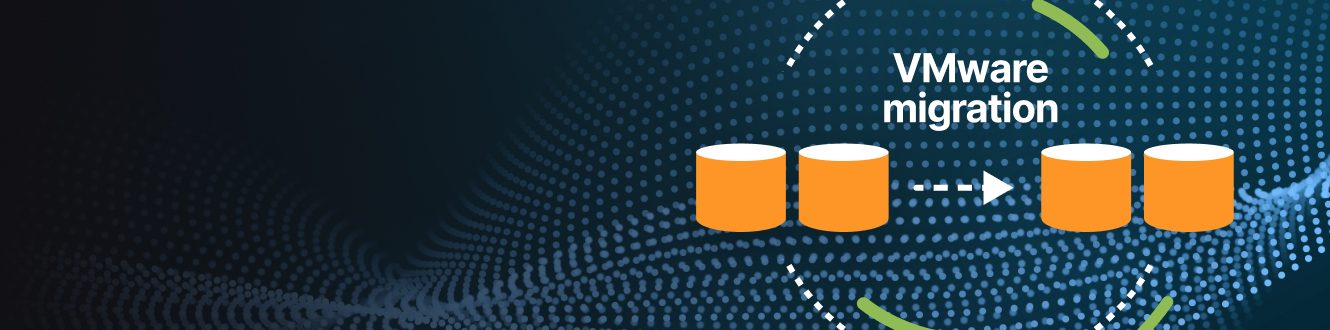
Virtualization is the backbone of modern IT infrastructure, empowering businesses to scale operations, optimize resources, and enhance resilience. VMware is at the forefront of this innovative technology. As organizations evolve, however, so do their IT needs. This necessitates strategies like VMware migration to adapt to changing demands.
VMware migration involves transferring virtual machines (VMs) or workloads between different environments. This process has gained renewed focus following Broadcom's acquisition of VMware as businesses evaluate their IT strategies and consider alternatives or complementary solutions.
Let’s take a closer look at what VMware migration is and types of VMware migration.
What Is VMware Migration?
VMware migration is the process of moving VMs or workloads from one environment to another, leveraging VMware's suite of tools and technologies. This can be converting physical servers into VMs to reduce hardware dependency, transferring VMs between VMware environments or from VMware to alternative platforms, or moving VMs to cloud-based VMware services or other cloud providers like AWS or Azure.
For example, an organization could use VMware vMotion to transfer a running virtual machine to another host with no downtime. VMware migration also facilitates hybrid cloud setups, thereby enabling businesses to operate seamlessly across on-premises and cloud environments.
Why Should You Migrate to VMware?
VMware migration is more about unlocking strategic advantages that align with modern IT and business goals than just moving workloads. Here are some reasons why organizations prioritize VMware migration:
- Achieve flexibility and scalability: With the dynamic nature of today’s business environment, IT systems must adapt quickly to changing demands. VMware migration enables organizations to scale resources seamlessly. For instance, during seasonal spikes, a retail business can migrate workloads to the cloud to handle increased traffic without overinvesting in on-premises infrastructure.
- Reduce downtime: Tools like VMware vMotion allow businesses to migrate running workloads without disruption. This is critical for industries such as finance or healthcare, where even a few minutes of downtime can lead to significant losses.
- Optimize resource utilization: VMware migration consolidates workloads, reducing the number of physical servers needed. This leads to better resource management and lower operational costs. For example, IT teams can migrate underutilized workloads to shared environments to reduce resource wastage and ensure optimal hardware use.
- Enhance disaster recovery and resilience: By migrating workloads to cloud environments, businesses gain access to robust disaster recovery solutions. VMware Cloud on AWS offers replication services that ensure business continuity even in the face of hardware failures or cyberattacks.
- Embrace modernization: VMware migration often aligns with broader modernization efforts, such as adopting hybrid cloud or multi-cloud strategies. It enables organizations to integrate legacy systems with advanced tools and services, improving performance and user experience.
Types of VMware Migration
VMware migration offers several methods tailored to varying infrastructure needs and business objectives. Understanding these types is crucial for choosing the right approach for your environment.
Physical to Virtual (P2V) Migration
P2V migration converts physical servers into virtual machines, enabling businesses to consolidate workloads and reduce hardware dependency. This process involves replicating the data, operating system, and applications of a physical server onto a virtual platform.
Suppose an organization manages legacy hardware and IT infrastructure. The organization can use P2V migration to modernize its infrastructure and enjoy cost savings and improved scalability without significant hardware investments.
Virtual to Virtual (V2V) Migration
This type of migration involves transferring VMs between virtual platforms, such as from one VMware host to another or between VMware and alternative platforms like Hyper-V.
Within VMware environments, tools like Cross vCenter vMotion facilitate migrations across data centers, maintaining operational continuity. For businesses exploring alternatives due to licensing changes, V2V migration enables transitions to platforms like KVM or VirtualBox with careful reconfiguration to maintain application performance.
Cloud Migration
Cloud migration moves workloads from on-premises VMware environments to public or private clouds. VMware Cloud on AWS, for example, allows businesses to run workloads natively in the cloud while leveraging the scalability and disaster recovery capabilities of AWS.
Many organizations adopt cloud migration to access flexible storage and computing resources, minimizing the need for large capital investments in hardware.
Hot vs. Cold Migration
These approaches categorize VMware migration with when workloads are moved based on activity levels:
- Hot migration: Tools like vMotion enable the transfer of active VMs between hosts or data centers without downtime. This is ideal for environments requiring continuous availability, such as e-commerce platforms or financial systems.
- Cold migration: In contrast, cold migration moves inactive VMs during maintenance windows or planned downtimes. While it avoids disrupting active workloads, it requires precise scheduling to minimize business impact.
VMware Migration Strategies
Choosing the right migration strategy is essential to align technical capabilities with organizational goals. Below are the primary strategies, explained with practical applications:
Lift and Shift
This strategy involves transferring workloads to a new environment with minimal modifications. IT teams use it to quickly move applications to new platforms or clouds, prioritizing speed over optimization.
For example, businesses migrating workloads to VMware Cloud on AWS often employ this approach to extend their infrastructure for seasonal demand. While this strategy provides a quick solution, workloads might not fully utilize the new platform's advanced features without further refinement.
Replatforming
In this approach, workloads are modified to optimize performance on the target platform. For instance, integrating VMware workloads with Everpure vVols enhances storage management by allowing granular, policy-driven configurations.
Replatforming is a middle ground between simplicity and optimization, offering better efficiency without requiring a full redesign. It’s commonly used when migrating applications to take advantage of cloud-native tools like auto-scaling or advanced analytics.
Refactoring
Refactoring involves redesigning workloads to fully leverage the capabilities of the target environment. This strategy is resource intensive but delivers long-term scalability, cost savings, and enhanced performance.
Businesses often refactor when transitioning legacy applications to cloud-native architectures. For example, an enterprise might rebuild its customer relationship management (CRM) system to operate as a microservices-based application, reducing deployment time and improving flexibility.
Hybrid Strategy
This strategy combines on-premises and cloud environments, allowing businesses to migrate select workloads while keeping others local. It’s particularly effective for organizations with strict compliance requirements or sensitive data.
For example, a healthcare provider might migrate non-sensitive workloads, such as appointment scheduling systems, to the cloud while retaining patient data on-premises for regulatory compliance.
Best Practices for VMware Migration
Ensuring a successful migration requires careful planning and execution.
- Perform Pre-migration Planning
Assess your current environment, define clear goals, and establish a detailed migration scope. You can prioritize workloads based on business-critical functions. - Create a Migration Roadmap
Develop a step-by-step plan, assigning timelines and responsibilities to each team member. Use tools like VMware Migration Assistant to streamline the process. - Conduct Pilot Migrations
Test the migration process with non-critical workloads to identify potential issues. This helps refine your migration strategy and reduce risks. - Back Up Data
Data protection is crucial during migrations. Solutions like Everpure Cloud Dedicated provide reliable backup and disaster recovery capabilities. - Monitor Post-migration Performance
Use VMware’s monitoring tools to analyze workload performance and optimize configurations after migration.
Conclusion
VMware migration is a cornerstone of IT modernization. It enables businesses to adapt to evolving demands, enhance resource efficiency, and embrace cloud innovation. Whether moving within VMware environments or exploring alternatives, the process requires strategic planning and robust tools to ensure success.
Solutions like Everpure FlashArray™ with virtual volumes (vVols) support, Everpure VMware Appliances, and Everpure Cloud Dedicated amplify the benefits of VMware migration. They offer high-performance storage and granular management. With features like policy-based storage management and robust data protection, these solutions help businesses achieve seamless transitions and long-term success.
We Also Recommend...
Browse key resources and events
TRADESHOW
Pure Accelerate 2026
June 16-18, 2026 | Resorts World Las Vegas
Get ready for the most valuable event you’ll attend this year.
PURE360 DEMOS
Explore, learn, and experience Everpure.
Access on-demand videos and demos to see what Everpure can do.
VIDEO
Watch: The value of an Enterprise Data Cloud
Charlie Giancarlo on why managing data—not storage—is the future. Discover how a unified approach transforms enterprise IT operations.

RESOURCE
Legacy storage can’t power the future
Modern workloads demand AI-ready speed, security, and scale. Is your stack ready?
Personalize for Me