Dismiss
Innovations
Everpure Simplifies Enterprise AI with Evergreen//One for AI and Data Stream Beta
Accelerate the transition from pilot to production with benchmark-proven performance, automated data pipelines, and a flexible consumption model.
Dismiss
June 16-18, Las Vegas
Pure Accelerate 2026
Discover how to unlock the true value of your data.
Dismiss
Innovation
A platform built for AI
Unified, automated, and ready to turn data into intelligence.
What Is Consumption as a Service?
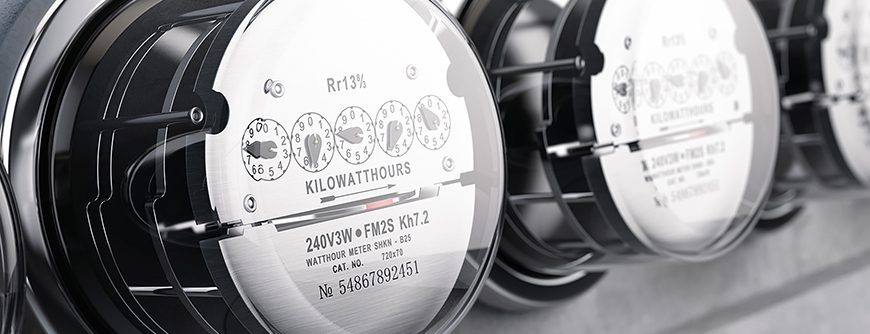
Consumption as a service is a way buyers can access and pay for a product or service as a utility, without having to own, manage, or maintain it themselves.
What Is the as-a-Service Model?
The as-a-service model describes any consumption model that allows consumers to access a product or service as a utility. In an as-a-service model, buyers can leverage the capabilities of a product or service without owning, licencing, or maintaining it. This consumption model enables buyers to “plug into” the functionality of a product or service and pay for it as needed.
What Is Consumed as a Service?
Consumed as a service is a descriptor for any offering that can be accessed as a utility. What do we mean by “as a utility”? Consider how your home gets power or electricity. If you’re on a grid, you probably don’t have the equipment to generate and harness your own power—you’re hardwired into a grid managed by a power company via power lines with a meter attached to indicate how much you’re using. The power company provides the electricity, measures your usage, then sends you a bill.
In general, the same goes for something that’s consumed as a service. It may mean that you acquire a capability you need via a subscription, through the cloud, or with an API. Whatever the modality, the common denominator is the utility-based delivery, which removes primary ownership, upgrades, and upkeep from the buyer’s responsibilities.
How Consumption as a Service Works
Whether it’s via a subscription or based on rate of usage, consumption as a service works based on a contract. A vendor agrees to provide a product or service, often with specific SLAs to ensure the quality of service. When a consumer selects a rate or capacity for a service, it’s with the assurance it will be delivered within the promised SLAs. Then, the consumer pays for that service—based on either the agreed-on rate or what they’ve used during that cycle.
Consumption-as-a-service business models can vary. Consider the home utility analogy above. That’s a consumption-based commercial model. But what about subscription-based commercial models?
Say you’re hardwired into a cable and internet provider, too. That utility may be billed based on a flat-rate monthly package you’ve agreed to—say, 200 channels. This is more typical of a subscription-based commercial model.
What is an advantage of the consumption-based commercial model over the subscription-based commercial model?
There’s one advantage consumption-based commercial models have over subscriptions: flexibility.
Say your power utility is billed as a subscription, with a flat rate per month. The advantage is you’ll only pay for what you use.
What Is Consumption-based IT?
Consumption-based IT is a way to describe an IT department that consumes its primary capabilities as a service vs. managing its own. Categories include infrastructure as a service (IaaS), platform as a service (PaaS), and software as a service (SaaS). They can include consumption-based data storage, backup and recovery services, cloud services, security monitoring, and more. This growing trend is reducing busy work and administrative effort for IT professionals, allowing them to manage less and focus on more innovative work.
STaaS vs. Consumed as a Service: Differences
Storage as a service (STaaS) is an example of a consumption model, specifically for customers to pay for off-premises storage capacity. The difference between STaaS and consumed as a service is that STaaS specifically speaks to storage services—including storage capacity, availability, and cost per use, such as per terabyte.
The “service” part of STaaS refers to how customers don’t have to manage their own storage hardware or data centers—that’s handled by the provider. The customer may not even need to specify a set capacity for their storage, opting to pay only for what they use, which offers extra flexibility in both storage forecasting and budgeting.
Benefits of the Consumed-as-a-Service Model
The consumed-as-a-service model has numerous benefits for buyers, most of which relate to simplicity, flexibility, and cost.
First, it can be easier to implement and ramp up using as-a-service offerings vs. building your own from scratch. It’s less likely a consumer will need to make a large up-front acquisition or hire more headcount or specialists to get started. For example, when STaaS is purchased to ramp up data storage capacity, an organisation won’t need to purchase its own rack or arrays or hire a storage administrator. The simplicity is in tapping into storage as a service, without expanding the company’s footprint or workload.
Second, the flexibility of the consumption-as-a-service model means the service can be expanded or dialed back quickly and easily, without a lot of lift. Without the physical addition or removal of new components, it’s easier for companies to ramp up services to meet growth or ramp back down as needs change.
Third, transparency into pricing models and cost is a benefit that ensures companies aren’t paying for what they don’t need, which can lead to waste and overspend.
Finally, maintenance and support may be built in. As-a-service models are often based on contracts and strict SLAs, which puts the onus of maintenance, updates, and patches on the provider, not the user. No weekend maintenance of hardware for the user—whatever they’re plugged into is the latest version.
The consumed-as-a-service model isn’t just advantageous for consumers; it’s a highly scalable business model for vendors, as well.
Disadvantages of Consumption as a Service
There may be disadvantages to consider, depending on the type or category of service consumed. For IT and software services, these can include lock-in or contract obligations; added administration and forecasting of needs; security risks or gaps in protection of off-premises data; or, the risk of overage fees or throttled performance during unpredictable times.
Why Consumption as a Service Is Better
That said, if an organisation is looking for agile, cost-effective, and low-touch ways to adopt new capabilities, products, or services, consumption as a service can be a better route than large, up-front costs and commitments. As-a-service consumption is a win-win, too, giving customers more flexibility and vendors highly scalable business models.
Uncomplicate Storage with Evergreen//One™, Consumption-based STaaS
Evergreen//One (formerly Pure as-a-Service™) is the industry’s most reliable storage consumption service, built on Evergreen™ architecture. It delivers the agility and flexibility of public cloud storage with the security and performance of an all-flash infrastructure. Teams can focus on projects with business outcomes, eliminating the complexity and cost associated with storage administration and provisioning years in advance. And, you’re billed on actual consumption, so you only pay for what you use.
We Also Recommend...
Browse key resources and events
TRADESHOW
Pure Accelerate 2026
June 16-18, 2026 | Resorts World Las Vegas
Get ready for the most valuable event you’ll attend this year.
PURE360 DEMOS
Explore, learn, and experience Everpure.
Access on-demand videos and demos to see what Everpure can do.
VIDEO
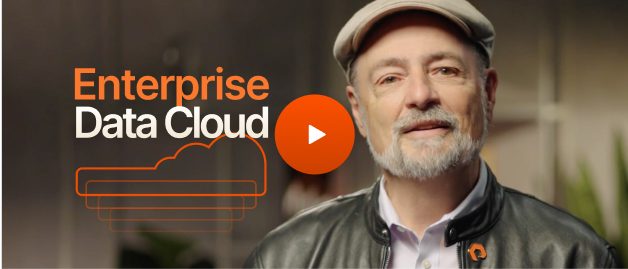
Watch: The value of an Enterprise Data Cloud
Charlie Giancarlo on why managing data—not storage—is the future. Discover how a unified approach transforms enterprise IT operations.
BLOG
What’s in a Net Promoter Score?
For nine consecutive years, Everpure has maintained a Net Promoter Score of over 80. Find out how we did it and what it means for our customers.
Personalize for Me