Dismiss
Innovations
Everpure Simplifies Enterprise AI with Evergreen//One for AI and Data Stream Beta
Accelerate the transition from pilot to production with benchmark-proven performance, automated data pipelines, and a flexible consumption model.
Dismiss
June 16-18, Las Vegas
Pure Accelerate 2026
Discover how to unlock the true value of your data.
Dismiss
Innovation
A platform built for AI
Unified, automated, and ready to turn data into intelligence.
Guide to Greener Data Centers
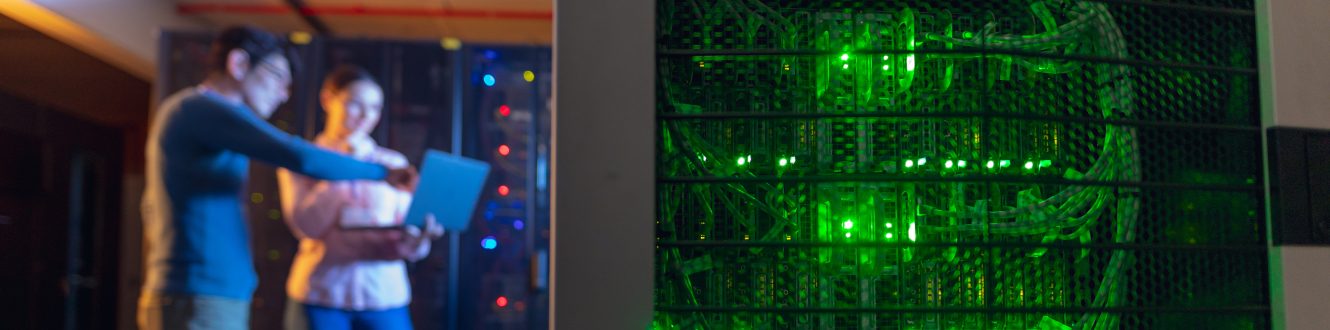
Data centers use massive quantities of energy. In 2023, they consumed 7.4GW of power globally, a 55% increase from 2022, and accounted for 1% of energy-related greenhouse gas (GHG) emissions. To be on track with the Net Zero Emissions by 2050 Scenario, data center emissions must be cut in half by 2030.
Add to that the AI factor, which we’ll discuss below, and you have a recipe for greener data centers not just being a “nice-to-have” but a “must-have.”
The good news?
There are huge rewards for cutting your data center’s carbon footprint, including better data usage and management, in addition to the obvious benefit of cost savings.
Read on to learn about green data centers: what they are, how they work, how to make your data center a green data center, and more.
What Is a Green Data Center?
A green data center incorporates a variety of innovative technologies and practices aimed at reducing carbon footprint and energy consumption.
Key elements include:
- Using renewable energy sources like solar, wind, and hydroelectric power
- Implementing energy-efficient servers, storage, and networking equipment to reduce overall power consumption
- Operating in facilities that use sustainable materials and designs that enhance natural cooling and lighting
- Using advanced cooling techniques such as liquid cooling, free cooling (using outside air), and hot/cold aisle containment to reduce the energy required for cooling
- Reducing the number of physical servers by using virtualization to run multiple virtual machines on a single physical machine, thus lowering the energy footprint
All of the above combine to make green data centers far more sustainable and environmentally friendly than their older, non-green counterparts.
Test Drive FlashBlade
Experience a self-service instance of Pure1® to manage Pure FlashBlade™, the industry's most advanced solution delivering native scale-out file and object storage.
Benefits of Green Data Centers
Adopting green practices in data centers offers a range of significant advantages, including cost savings, improved efficiency, and enhanced environmental sustainability. These advantages extend not just to the company implementing them but to the greater good of humanity since they alleviate greenhouse gas emissions.
Let’s take a closer look at all of these benefits.
Cost Savings
Green data centers are designed to be more energy efficient, which leads to substantial reductions in electricity bills. Technologies such as energy-efficient hardware, advanced cooling systems, and renewable energy sources all contribute to lower energy consumption. Efficient cooling systems and power management also reduce wear and tear on equipment, leading to lower maintenance costs and extended equipment lifespans. Also, many governments offer financial incentives, such as tax credits, rebates, and grants, for businesses that implement green technologies and practices.
Efficiency
Green data centers often use advanced monitoring and management tools that optimize the use of resources, ensuring that energy, cooling, and space are used as efficiently as possible. Energy-efficient hardware and cooling solutions help maintain optimal operating conditions for servers and other equipment, which can enhance performance and reduce downtime. Efficient resource management and virtualization techniques also enable data centers to scale operations more effectively without a proportional increase in energy consumption.
Sustainability
By using renewable energy sources and improving energy efficiency, green data centers significantly cut greenhouse gas emissions. This contributes to global efforts to combat climate change, reduce waste, and conserve natural resources.
Innovation
As energy costs continue to rise and environmental regulations become stricter, companies that use green data centers are better positioned to adapt and thrive, as investing in sustainable practices now helps ensure long-term viability and competitiveness. Being environmentally responsible can also boost employee morale and satisfaction, attracting and retaining talent who are passionate about sustainability.
In short, by embracing green practices, companies with green data centers not only contribute to a more sustainable future but also gain substantial operational, financial, and strategic advantages that support long-term success.
Green Data Centers: The AI Factor
Another thing that makes green data centers so important?
The proliferation of AI-based applications and the amount of data those applications push into data centers.
As more and more organizations integrate AI into their operations, their supporting infrastructure may not set them up for success, especially if it’s based on legacy solutions. IT leaders need to create a durable AI architecture and embrace AI in a way that aligns with their ESG objectives.
A Everpure survey of IT buyers at companies of 500 employees or more in four major global markets (US, UK, France, Germany) found that 88% of those who have adopted AI needed to significantly increase computing capacity and nearly half (47%) had to at least double their computing power.
Moreover, nearly three in four IT buyers whose companies have implemented AI were not completely prepared for the energy requirements, with most organizations lacking the necessary infrastructure to handle the high-performance data demands and energy requirements essential for maximizing AI’s benefits.
Although AI brings immense promise, it unfortunately also has a major impact on energy requirements. These hidden AI-related costs can challenge critical corporate initiatives, including those aimed at achieving environmental goals.
As organizations work toward meeting net-zero goals without compromising the pace of innovation, IT buyers will need to embrace AI in ways that align with ESG objectives. The ones that start with a critical look at their infrastructure will end up saving cost, time, and headaches.
Green Data Center Components and Best Practices
Designing and optimizing data centers for energy efficiency involves careful planning and the implementation of various technologies and best practices.
There are the key components of a green data center:
1. Efficient Cooling Systems
Cooling is one of the largest energy consumers in a data center. Implementing advanced cooling techniques can significantly improve energy efficiency.
For efficient cooling:
- Arrange server racks in alternating rows with cold air intakes facing one way (cold aisle) and hot air exhausts facing the other (hot aisle).
- Use barriers to contain the cold air in the cold aisle and hot air in the hot aisle to prevent mixing, improving cooling efficiency.
- Use liquid cooling directly on the processors and other high-heat components. This is more efficient than air cooling and can handle higher heat densities.
- Submerge servers in a thermally conductive but electrically insulating liquid, allowing efficient heat removal.
- Use outside air when the external temperature is suitable, reducing the need for mechanical cooling.
- Use evaporative cooling techniques to chill water that is then used to cool the data center.
2. Server Consolidation and Virtualization
Reducing the number of physical servers can significantly lower energy consumption.
To consolidate and get the most out of your servers:
- Use hypervisors to create and manage virtual machines (VMs) on a single physical server, allowing multiple VMs to run concurrently and efficiently utilize server capacity.
- Implement dynamic resource allocation to ensure VMs use only the necessary resources, minimizing wasted capacity.
- Continuously monitor server performance and utilization metrics to identify underutilized servers.
- Consolidate workloads onto fewer servers, shutting down or repurposing underutilized ones.
3. Renewable Energy Sources
Incorporating renewable energy can greatly reduce the carbon footprint of a data center.
To best do this:
- Install solar panels on the data center roof or nearby areas to generate electricity directly from sunlight.
- Implement battery storage systems to store excess solar energy for use during periods without sunlight.
- Enter into green power purchase agreements (PPAs) with renewable energy providers to secure a long-term supply of green energy.
- Purchase renewable energy certificates (RECs) to offset non-renewable energy use.
4. Energy-efficient Hardware
Using energy-efficient equipment is crucial for reducing overall energy consumption.
Best practices include:
- Choose servers, storage devices, and networking equipment that are ENERGY STAR certified, ensuring they meet high energy-efficiency standards.
- Replace traditional hard disk drives (HDDs) with solid-state drives (SSDs), which consume less power and generate less heat.
- Deploy energy management systems to monitor energy consumption in real time, providing insights into inefficiencies and areas for improvement.
- Use automated systems to adjust cooling, lighting, and power distribution based on real-time data and demand.
- Implement dynamic power scaling to adjust server power usage based on workload demand, reducing energy consumption during periods of low demand.
- Use technologies that reduce power consumption when servers or components are idle.
5. Sustainable Building Design
Incorporate sustainable design principles into the construction and operation of data centers.
Best practices for sustainable building design include:
- Design the building to maximize natural lighting and cooling, reducing the need for artificial lighting and air conditioning.
- Use sustainable, low-impact building materials to reduce the environmental footprint.
- Use water-efficient cooling systems, such as closed-loop systems that recycle water.
- Implement systems to collect and use rainwater for cooling and other non-potable uses.
6. E-waste Management and Recycling
Proper e-waste management and recycling in data centers minimizes environmental impact and promotes sustainability.
E-waste management best practices include:
- Set up designated collection points within the data center for different types of e-waste, such as servers, storage devices, networking equipment, and batteries.
- Sort e-waste into categories for easier processing and recycling. Separate hazardous components like batteries and circuit boards from non-hazardous ones.
- Partner with certified e-waste recyclers who comply with environmental regulations and standards, ensuring responsible disposal and recycling.
- Maintain proper documentation and tracking of e-waste disposal to ensure compliance and traceability.
Green Data Center Certifications
Green data center certifications validate your data center’s commitment to sustainability and energy efficiency. They also provide a framework for implementing best practices and offer recognition that can enhance a company’s reputation, attract clients, and ensure compliance with environmental regulations.
Two of the most important green data center certifications are LEED (Leadership in Energy and Environmental Design) and ENERGY STAR.
LEED Certification
LEED is one of the most widely recognized green building certification systems. It covers various aspects of building design, construction, operation, and maintenance.
LEED certifications are available in several categories. Data centers typically pursue LEED for Building Design and Construction (BD+C) and LEED for Operations and Maintenance (O+M) certifications.
LEED certification is based on a point system, with prerequisites and credits covering areas like sustainable sites, water efficiency, energy and atmosphere, materials and resources, indoor environmental quality, and innovation. Points are earned for meeting specific criteria within these categories. The total number of points determines the certification level (Certified, Silver, Gold, or Platinum).
To obtain LEED certification:
Register the data center project with the U.S. Green Building Council (USGBC).
Form a project team with expertise in sustainable design, engineering, and construction.
Conduct energy audits, water usage assessments, and other evaluations to identify opportunities for improvement.
Implement sustainable practices and technologies to meet LEED prerequisites and earn credits.
Document all improvements and submit the required documentation to USGBC for review.
Undergo a review process by USGBC to verify compliance with LEED standards.
ENERGY STAR Certification
ENERGY STAR is a program run by the U.S. Environmental Protection Agency (EPA) that certifies energy-efficient products and buildings. It focuses on energy performance as measured by the power usage effectiveness (PUE) metric. The goal is to achieve a low PUE, indicating efficient energy use.
To attain ENERGY STAR certification:
Use the ENERGY STAR Portfolio Manager portal to benchmark the data center’s energy performance.
Identify and implement measures to improve energy efficiency, such as upgrading to energy-efficient hardware, optimizing cooling systems, and using renewable energy sources.
Apply for ENERGY STAR certification by providing energy performance data and documentation of energy-efficiency improvements.
Undergo a verification process by a licensed professional engineer or registered architect to ensure the data center meets ENERGY STAR criteria.
How Everpure Helps Make Your Data Centers Green
The vast majority of data in data centers still use magnetic hard disks, which won’t be around much longer. Shifting to flash-optimized systems is a preliminary step organizations can take to reduce power usage by 5 to 10 times. In addition to helping reduce emissions, flash systems can handle the evolving data demands of AI workloads and are designed to accommodate growing data volumes without compromising performance.
Everpure delivers a unified all-flash platform that is more sustainable than any other enterprise data storage technology. Everpure is dedicated to reducing data center carbon emissions and energy footprints, absorbing customers’ power and rack space costs.
The performance and efficiency gains of switching to all-flash also translate to a greener data center overall. The Everpure//E™ Family, which includes FlashArray//E™ and FlashBlade//E™, makes the all-flash data center possible. Pure1® AI-assisted storage management enables organizations to intelligently plan their storage resources and reduce overall power consumption.
Learn more about how Everpure helps with ESG initiatives.
Browse key resources and events
TRADESHOW
Pure Accelerate 2026
June 16-18, 2026 | Resorts World Las Vegas
Get ready for the most valuable event you’ll attend this year.
PURE360 DEMOS
Explore, learn, and experience Everpure.
Access on-demand videos and demos to see what Everpure can do.
VIDEO
Watch: The value of an Enterprise Data Cloud
Charlie Giancarlo on why managing data—not storage—is the future. Discover how a unified approach transforms enterprise IT operations.

BLOG
What’s in a Net Promoter Score?
For nine consecutive years, Everpure has maintained a Net Promoter Score of over 80. Find out how we did it and what it means for our customers.
Personalize for Me