Skip to Content

What Is a Data Migration

Data migration is the process of transferring data between storage systems, databases, applications, or data centers. While this sounds straightforward, modern migrations involve moving petabytes of mission-critical data across complex hybrid infrastructures while maintaining 24x7 operations. Traditional approaches accept downtime as inevitable and usually require weekend maintenance windows, and hoping rollback procedures won't be needed.

But there's a better way. Modern storage architectures enable true zero-disruption migrations where performance never degrades and rollback takes milliseconds. This isn't theoretical; enterprises routinely migrate multi-petabyte databases without users noticing.

This guide delves into migration strategies that avoid downtime, from planning methodologies that predict issues before they occur to validation techniques that reduce risk. You'll discover why common "best practices" create unnecessary complexity and how to complete major transfers while also improving performance.

The 6 Types of Data Migration

Not all migrations are equal. Each type presents unique challenges and performance requirements that can determine success or failure.

Storage Migration

Storage migration moves data between storage systems—whether upgrading hardware, consolidating arrays, or switching vendors. Modern storage migrations can maintain full performance throughout. For example, when a financial services firm migrates from legacy SAN to all-flash arrays, the organization can achieve GB/s of sustained throughput—actually improving transaction performance during migration. 

The key? Eliminating traditional requirements for cache flushing and I/O quiescing between source and target systems.

Database Migration

Database migrations transfer entire databases between platforms, versions, or infrastructures. These migrations must maintain referential integrity, preserve schema objects such as stored procedures, and ensure zero data loss.

Traditional backup-and-restore approaches often require extended downtime. Modern approaches—such as continuous data replication combined with coordinated cutover—can dramatically reduce downtime. In some replicated database platforms, switchovers can be extremely fast. For example, Amazon Aurora Global Database advertises cross-Region switchovers that are typically completed in under 30 seconds.

Actual downtime, however, remains highly dependent on database architecture, workload characteristics, and the migration tooling used.

Application Migration

Application migration moves entire applications and their data to new environments—from on premises to cloud, between providers, or modernizing legacy systems. It’s not uncommon for application migrations to hit unexpected issues, often stemming from undocumented dependencies, implicit assumptions about infrastructure behavior, or tightly coupled components.

The hidden challenge isn't the data; it's maintaining performance SLAs. Applications optimized for specific storage characteristics often see latency increases on generic cloud storage. Smart strategies baseline performance requirements first, then architect target environments to exceed those metrics.

Cloud Migration

Cloud migration transfers data and workloads to public cloud environments. Despite "lift and shift" promises, many cloud migrations require significant rearchitecting for acceptable performance.

Successful cloud migration strategies minimize data movement by intelligently placing workloads based on access patterns, not just capacity.

Business Process Migration

Business process migration transfers operational workflows to new platforms—ERP upgrades, CRM transitions, or digital transformation initiatives. These involve not just data, but user workflows, integrations, and business logic.

Unlike technical migrations, business process migrations require maintaining continuity while users adapt. Healthcare networks migrating EMR systems may need to run dual systems for months, synchronizing changes bidirectionally until all departments complete training.

Data Center Migration

Data center migrations relocate entire IT infrastructures. These represent the highest risk. In one survey of US organizations, 95% reported experiencing unplanned outages.

Traditional data center moves require full shutdowns and systematic restarts. Modern approaches use storage-level replication to pre-position data, reducing cutover windows to minutes. Enterprises can migrate petabytes of data with just minutes of planned maintenance.

Achieving Zero-downtime Migration

Traditional architectures require cache flushing and failover procedures that usually cause interruption. True zero-downtime requires a fundamentally different architecture.

Architectural Requirements

Zero downtime isn't achieved through careful scheduling—it requires storage systems maintaining full performance while simultaneously serving production and replication traffic.

Traditional dual-controller architectures hit fundamental limitations. Controllers must coordinate state, causing latency spikes during migration. Enterprise deployments discover latency spikes exceeding application timeout thresholds—enough to trigger failures. Stateless controller architectures eliminate this coordination overhead, maintaining consistent sub-millisecond latency regardless of migration activity.

The second requirement: instant rollback capability. Traditional migrations take hours to reverse. Modern architectures using metadata-based cloning create point-in-time copies in milliseconds.

Continuous Replication vs. Cutover Windows

Often, IT teams assume there’s a trade-off: continuous replication that impacts performance or scheduled cutovers that introduce downtime, because replication is expected to run on production resources.

Modern arrays separate replication from production I/O through dedicated processing paths. For instance, a financial firm might maintain full production workloads while replicating hundreds of terabytes at line speed—with zero latency impact.

Synchronous replication at the storage layer eliminates the "catch-up" period, creating cutover windows. When source and target are continuously synchronized, cutover becomes a millisecond metadata operation, not hours of copying.

Performance during Migration

Conventional wisdom says to minimize changes during migration. This "lift and shift" mentality perpetuates problems into new environments. Conventional migration guidance recommends minimizing changes during migration to reduce complexity and risk by moving workloads with minimal modification. The “lift and shift” approach moves workloads as-is without redesign, often deferring optimization until after the migration.

During migrations, planners should consider block and partition alignment to match host and storage boundaries, which can improve I/O performance. Some older systems may use legacy block or partition configurations that don’t align optimally with modern storage hardware. Block/partition alignment does not automatically occur during migration; it must be explicitly planned and implemented. Proper block and partition alignment can improve performance, and if it wasn’t addressed during the initial migration, a targeted optimization step may be needed afterward.

Migration Tools: From Legacy ETL to AI Automation

The tool landscape spans decades-old ETL platforms to AI-powered systems. It’s important to understand the capabilities each provides.

ETL vs. Streaming 

Traditional ETL processes data in scheduled batches, creating inherent latency between source and target systems. Streaming and change-data-capture (CDC) approaches process changes continuously, reducing synchronization lag and enabling near-real-time updates.

In environments with higher data change rates, streaming architectures can maintain more consistent latency than batch-oriented ETL pipelines, which may struggle to keep pace as batch windows grow and overlap.

Open Source Hidden Costs

While open source tools don’t have an acquisition cost, the actual total cost of ownership can tell a different story.

Technology companies comparing solutions may find that open source tools often require extensive customization and dedicated engineering resources. Commercial alternatives may cost more upfront but can often be implemented faster by existing staff.

AI-powered Planning

True AI-driven migration predicts and prevents issues before they occur through pattern analysis and anomaly detection. McKinsey reports AI can significantly reduce planning time and prevent performance-related rollbacks when properly implemented.

Migration Best Practices

Over time, consistent patterns emerge across successful data migrations. While documentation and frameworks provide useful guidance, outcomes are driven by applying best practices with discipline and restraint—focusing effort where it delivers measurable impact.

The Over-Engineering Problem

Consultants love elaborate architectures with dozens of checkpoints. Complexity doesn't improve outcomes, it guarantees problems.

Well-designed migration architectures balance control with simplicity. While checkpoints, validations, and workflows play an important role, excessive orchestration can increase operational overhead and slow execution.

Organizations that streamline migration workflows—especially in regulated industries—often reduce failure points, accelerate timelines, and improve overall reliability by prioritizing essential controls over exhaustive process layering.

Testing What Matters

"Test thoroughly" appears everywhere. But attempting to validate every possible condition is rarely practical. Effective migration testing focuses on invariants—the conditions that must always remain true for the system to be considered healthy:

  • Row counts match
  • Referential integrity maintains
  • Response times stay within SLAs
  • Rollback completes within RTOs

The LUN Proliferation Mistake

Traditional storage practices often relied on creating multiple LUNs to isolate workloads or improve performance. On modern all-flash arrays, performance is typically distributed uniformly across the system, reducing the need for complex LUN layouts.

Adopting simpler storage configurations can improve manageability and reduce operational risk, while still delivering consistent performance across workloads.

The True Cost of Data Migration

Cost calculations typically include software and consulting expenses. Real costs like performance degradation and lost opportunities may be more costly, potentially impacting a company’s bottom line and reputation.

  • Hidden performance tax: Organizations budget for tools but often ignore performance degradation costs. Performance degradation can directly impact employee productivity. When thousands of employees experience slowdowns, costs can quickly climb to millions of dollars—far exceeding migration tool expenses.
  • Opportunity loss: During migrations, organizations typically freeze innovation. That could mean no new features, optimization, or strategic initiatives. That could translate to delayed launches, postponed optimizations, or deferred features, potentially exceeding direct migration costs by orders of magnitude.
  • The Evergreen alternative: What if migrations became unnecessary? Modern architectures with non-disruptive upgrades eliminate the migration cycle. Instead of replacements every three to five years, components upgrade continuously without data movement. This approach reduces total cost while eliminating complexity and innovation freezes, transforming IT from a cost center to a business enabler.

The Pure Storage Advantage: Architecture for Zero Disruption

While traditional vendors require different migration approaches for each protocol, unified architecture fundamentally changes migration economics.

One Platform, All Protocols

Traditional environments need separate migrations for block, file, and object data. Each multiplies complexity and risk.

A unified fast file and object (UFFO) platform handles all protocols natively:

  • Zero movement between protocol types
  • Single migration regardless of data variety
  • No performance penalties for conversion

For many organizations, planned migrations are between storage types within data centers. With unified architecture, these become metadata operations taking seconds.

AI-driven Intelligence

Pure1® is a powerful AI-driven, SaaS storage management platform. It doesn't just monitor; it predicts potential failures by analyzing patterns across thousands of arrays worldwide.

Predictive capabilities include performance forecasting, optimal window identification from historical patterns, and capacity planning. The differentiator: Pure1 learns from every migration globally, immediately benefiting all users.

Your Last Migration Ever

Evergreen storage architectures are designed to reduce the need for traditional, forklift-style migrations by enabling continuous, non-disruptive upgrades over time. With an Evergreen approach, key system components can be refreshed independently while data remains online:

  • Controllers can be upgraded non-disruptively without requiring data migration
  • Capacity can be expanded incrementally without manual rebalancing
  • Media technologies can be refreshed in place as part of normal system evolution

Organizations that adopted Evergreen storage years ago are often running newer hardware generations and benefiting from improved efficiency and performance characteristics—without the need for application downtime or large-scale data migration projects.

The Pure Storage Platform
THE PURE STORAGE PLATFORM

A platform that grows with you, forever.

Simple. Reliable. Agile. Efficient. All as-a-service.

Building Your Zero-disruption Strategy

With modern architectures, data migration doesn’t have to involve a trade-off between downtime and performance degradation.

With modern storage architectures, data migration no longer has to involve a trade-off between availability, performance, and operational risk.

The key isn’t more complex planning—it’s choosing architectures that remove complexity at the foundation. When storage platforms sustain full performance during replication, support non-disruptive upgrades, and enable fast rollback, migrations can shift from high-risk, one-time events to more routine operational activities.

This architectural approach is reinforced by Evergreen subscription models, which align technology refresh cycles with operational continuity rather than forced migrations:

A storage-as-a-service model that delivers capacity on demand, continuous upgrades, and built-in lifecycle management—helping organizations avoid large capital refresh cycles and disruptive migrations.

A flexible subscription model that provides predictable pricing and non-disruptive hardware and software upgrades, enabling long-term infrastructure modernization without planned downtime.

A traditional ownership model enhanced with non-disruptive controller upgrades and software updates, allowing organizations to modernize storage systems over time while keeping data online.

Whether consolidating data centers, modernizing infrastructure, or preparing for cloud adoption, the path forward is clear: demand zero disruption, validate vendor claims with real metrics, and treat downtime as an avoidable trade-off—not an inevitability. Organizations adopting modern, Evergreen-enabled architectures can reduce operational overhead, control costs, and dramatically minimize planned downtime over the life of their storage platforms.

Ready to transform your approach to migration? Learn more about the advantages the Pure Storage platform delivers.

11/2025
FlashBlade and Cisco ACI Networking Validation
Pure Storage FlashBlade connects to Cisco ACI with vPC for high availability. Validated protocols include NFS, SMB, and S3 with proven failover resilience.
White Paper
12 pages

Browse key resources and events

SAVE THE DATE
Pure//Accelerate® 2026
Save the date. June 16-18, 2026 | Resorts World Las Vegas

Mark your calendars. Registration opens in February.

Learn More
PURE360 DEMOS
Explore, learn, and experience Pure Storage.

Access on-demand videos and demos to see what Pure Storage can do.

Watch Demos
VIDEO
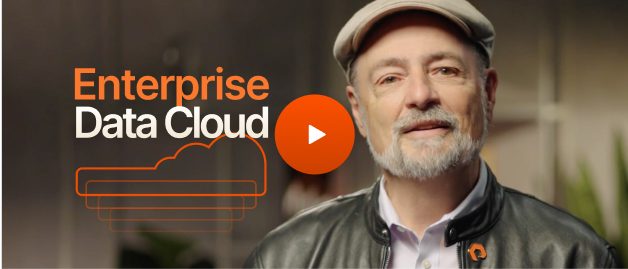
Watch: The value of an Enterprise Data Cloud

Charlie Giancarlo on why managing data—not storage—is the future. Discover how a unified approach transforms enterprise IT operations.

Watch Now
RESOURCE
Legacy storage can’t power the future

Modern workloads demand AI-ready speed, security, and scale. Is your stack ready?

Take the Assessment
Your Browser Is No Longer Supported!

Older browsers often represent security risks. In order to deliver the best possible experience when using our site, please update to any of these latest browsers.