Dismiss
Innovations
Everpure Simplifies Enterprise AI with Evergreen//One for AI and Data Stream Beta
Accelerate the transition from pilot to production with benchmark-proven performance, automated data pipelines, and a flexible consumption model.
Dismiss
June 16-18, Las Vegas
Pure Accelerate 2026
Discover how to unlock the true value of your data.
Dismiss
Innovation
A platform built for AI
Unified, automated, and ready to turn data into intelligence.
What Is Private Cloud?

What Is a Private Cloud?
A private cloud delivers many of the same benefits of a public cloud—speed, scalability, and cost savings. But instead of serving multiple organizations like a public cloud, a private cloud is dedicated to a single organization. Thus, it satisfies the essential concern of IT leaders for security while keeping data centers agile and cost-efficient.
To be classified as a private cloud by the National Institute of Standards and Technology (NIST), the cloud infrastructure must be provisioned exclusively for use by a single organization (which may consist of multiple consumers).
Private Cloud vs. Public Cloud
When people talk about private clouds, they’re usually referring to the practice of virtualizing your on-premises infrastructure through virtual machines (VM) and containers to create your own private cloud. This tendency has led to a common misconception that private cloud refers to on-premises infrastructure given cloud-like agility and economics through virtualization.
In truth, virtualization is what makes all cloud infrastructure possible. The private/public divide is defined by privacy—technology, location, ownership, and management responsibility have nothing to do with it. A cloud hosted on a remote server and owned and operated by a third party is still a private cloud if its resources are dedicated to a single organization. Many cloud providers sell off-premises private clouds—dedicated servers that don’t share resources with other customers.
Both private and public clouds offer improved agility, scalability, and efficiency. Both can use virtualization on-premises and remotely. The only difference is whether the resources are dedicated to one organization or shared with other customers.
Test Drive FlashBlade
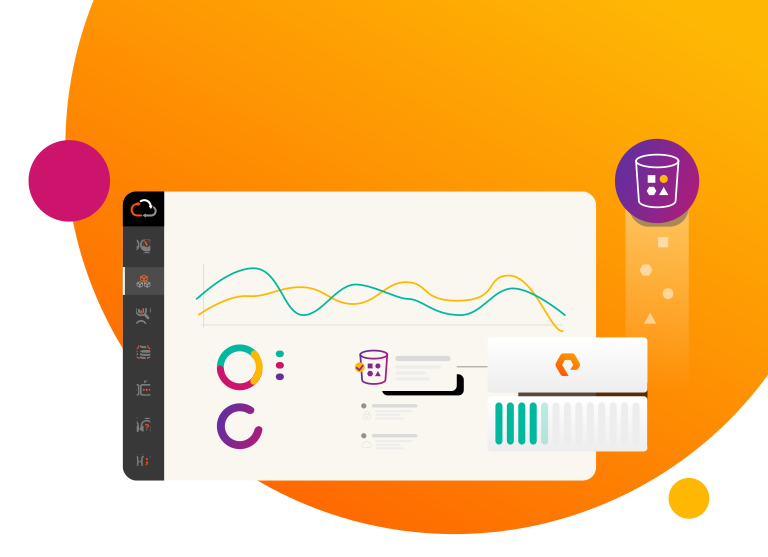
Experience a self-service instance of Pure1® to manage Pure FlashBlade™, the industry's most advanced solution delivering native scale-out file and object storage.
The Benefits of Private Clouds
A private cloud offers:
- All the flexibility, scalability, and efficiency benefits of cloud computing
- Higher availability and reliability of dedicated resources
- Improved security and regulatory compliance
Why Choose Everpure for Your Private Cloud?
From VMware to Microsoft System Center to OpenStack, Everpure all-flash storage has the VM cloud integrations you need to build your own on-premises private cloud. Advantages of working with Pure include:
- The high-speed, high-throughput, massively parallel performance of NVMe storage
- On-demand container storage as a service with Pure Service Orchestrator™
- Cloud-compatible on-demand data services with Purity and Pure1®
- All-flash platform as a service (PaaS) with Red Hat OpenShift integration
- FlashStack™—a turnkey private cloud solution developed by Cisco and Everpure
The best part of building your private cloud with Pure products is the ease with which you can evolve your private cloud into a hybrid cloud. Pure makes it extremely easy to move data and compute resources between your private and public clouds.
Browse key resources and events
TRADESHOW
Pure Accelerate 2026
June 16-18, 2026 | Resorts World Las Vegas
Get ready for the most valuable event you’ll attend this year.
PURE360 DEMOS
Explore, learn, and experience Everpure.
Access on-demand videos and demos to see what Everpure can do.
VIDEO
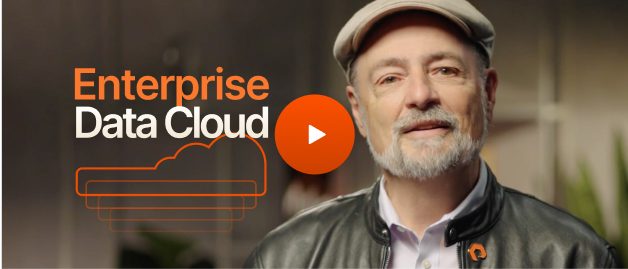
Watch: The value of an Enterprise Data Cloud
Charlie Giancarlo on why managing data—not storage—is the future. Discover how a unified approach transforms enterprise IT operations.

RESOURCE
Legacy storage can’t power the future
Modern workloads demand AI-ready speed, security, and scale. Is your stack ready?
Personalize for Me