Dismiss
Innovations
Everpure Simplifies Enterprise AI with Evergreen//One for AI and Data Stream Beta
Accelerate the transition from pilot to production with benchmark-proven performance, automated data pipelines, and a flexible consumption model.
Dismiss
June 16-18, Las Vegas
Pure Accelerate 2026
Discover how to unlock the true value of your data.
Dismiss
Innovation
A platform built for AI
Unified, automated, and ready to turn data into intelligence.


Our Products
Systems
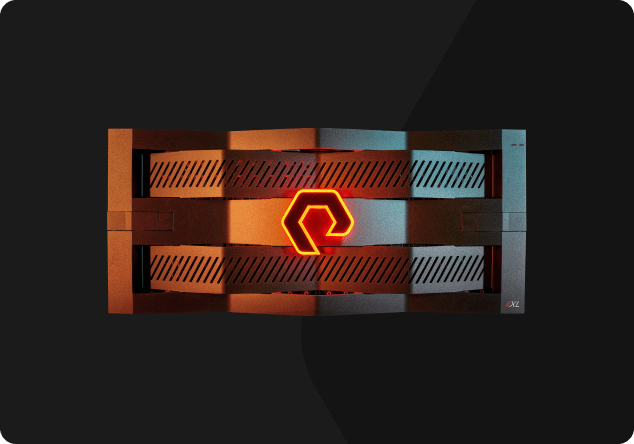
FlashArray//XL™
Gain enterprise-grade performance without enterprise complexity with Pure’s NVMe storage array solution.
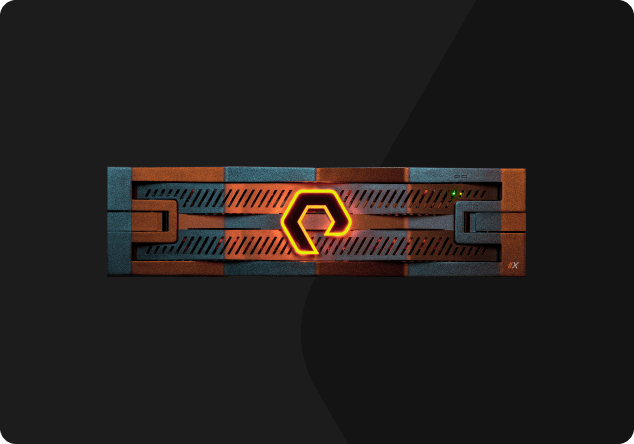
FlashArray//X™
From entry-level to enterprise applications, accelerate business results with your most critical data.
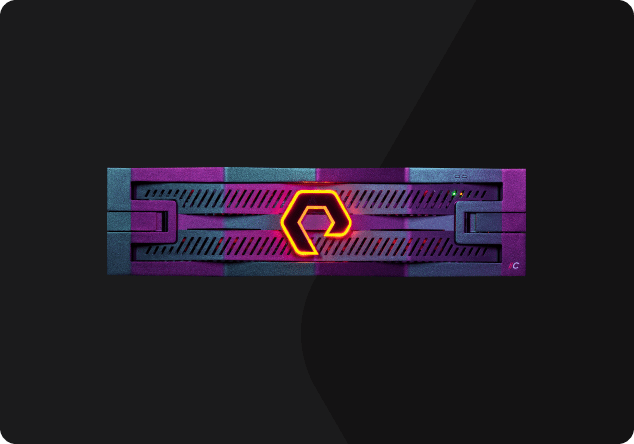
FlashArray//C™
Enterprise-grade QLC delivers where hybrid can’t. Get NVMe performance, hyper-consolidation, and simplified management.

FlashArray//E™
The all-flash advantage at disk economics, targeting 750TB-6PB.
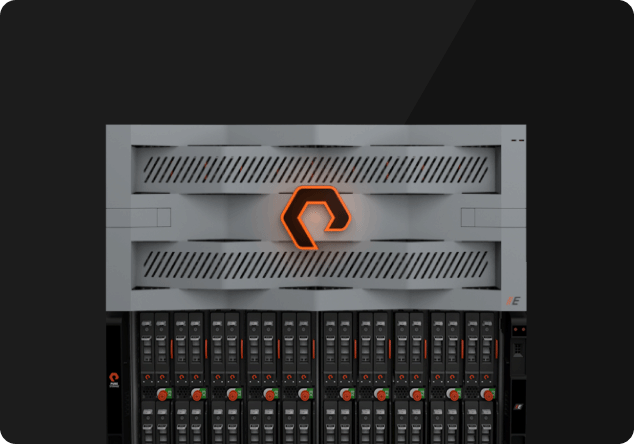
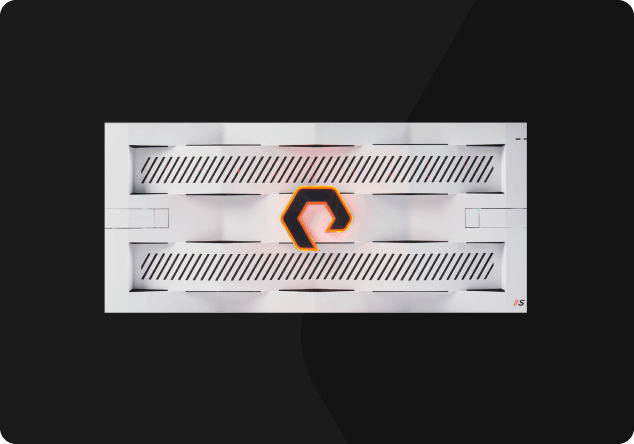
FlashBlade//S®
The only scale-out storage platform that efficiently powers your modern unstructured data needs—delivering cutting-edge capabilities without growing complexity.
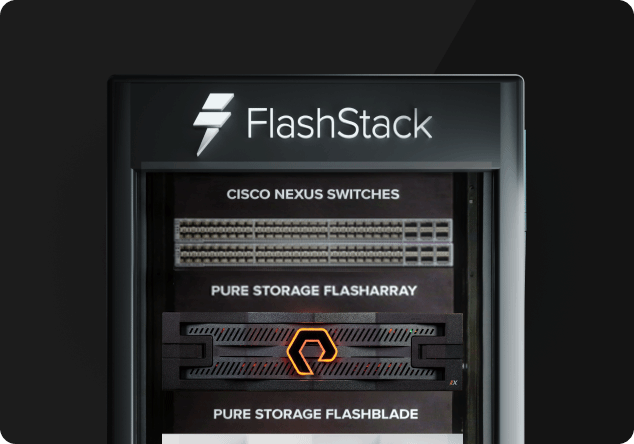
FlashStack®
FlashStack combines compute, network, and storage to provide a modern infrastructure platform.
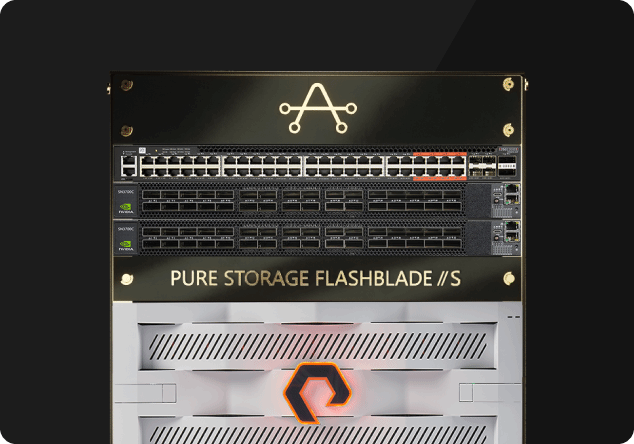
AIRI//S™
Simplify AI deployment and scale quickly and easily, enabling your data teams to focus on delivering insights, instead of managing IT.

Introducing the Everpure//E Family
Economical. Efficient. Everlasting. All-flash at the cost of disk—without the costs of disk.
Subscriptions

Evergreen//One™
Shift to a consumption-based storage model with Evergreen//One—a fully flexible enterprise-grade storage subscription service.

Evergreen//Flex™
Get a subscription that provides flexibility to respond to changes in demand and use. Increase your storage agility and maximize ROI on capacity usage with lower upfront costs.

Evergreen//Forever™
Gain the advantage of Evergreen//Forever—Pure’s subscription model that delivers seamless, rapid upgrades and expansion, without disruption.
Software

Pure1®
Experience self-driving storage with full-stack, AI-powered data-storage management and monitoring.

Purity Operating Environment
Make every bit of your organization's data available—in the most insightful way possible—so you can take informed action.


Pure Fusion™
Bring the simplicity of the cloud operating model anywhere with on-demand consumption and back-end provisioning.

Portworx® by Everpure
Portworx® powers cloud-native apps with the most complete Kubernetes Data Services.

Pure Cloud Block Store™
Benefit from Pure Cloud Block Store with seamless data mobility, resilience, and a consistent experience—no matter where your data lives.

Everpure Protect Service // DRaaS
Get a simple, cost effective, on-demand, disaster recovery as a service (DRaaS) that offers native public cloud protection for VMware.
What is an all-flash array?
An all-flash array (AFA) is a storage infrastructure that contains flash memory drives instead of spinning-disk drives. All-flash storage is also referred to as a solid-state array (SSA). AFAs and SSAs offer speed, performance, and agility for your business applications.
Where do all-flash arrays fit into the world of data storage?
For much of modern history, data centers have been dominated by hard-disk drive (HDD) technologies configured as network-attached storage (NAS) and/or storage area networks (SANs).
With the advent of solid-state drives (SSDs), data storage companies started offering expensive high-performance flash memory solutions for Tier 0 and Tier 1 data applications. The lack of spinning disks means solid-state drives are orders of magnitude faster than traditional technologies.
Thanks to Moore’s Law, flash storage continued to become more cost-effective, making the all-flash versions of NAS devices and SANs economically feasible.
What are the benefits of bringing all-flash memory to the data center?
As you might guess, simply switching out your HDDs with SSDs is enough to increase the speed and performance of your NAS and SAN solutions. The benefits of an all-flash array are the same as the benefits of flash memory itself.
All-flash arrays vs. hybrid storage arrays vs. HDD arrays
Generally speaking, all-flash arrays are the fastest and most performant. These are followed by hybrid arrays which use a combination of flash and HDD within the same storage array. While not as fast as all-flash arrays, cheaper HDD racks may be used to add capacity when performance isn’t needed. Traditional arrays are the slowest.
Product and program availability varies by region.
Contact sales for additional information.
Personalize for Me